Showing posts with label dakota. Show all posts

Tuesday, February 21, 2012

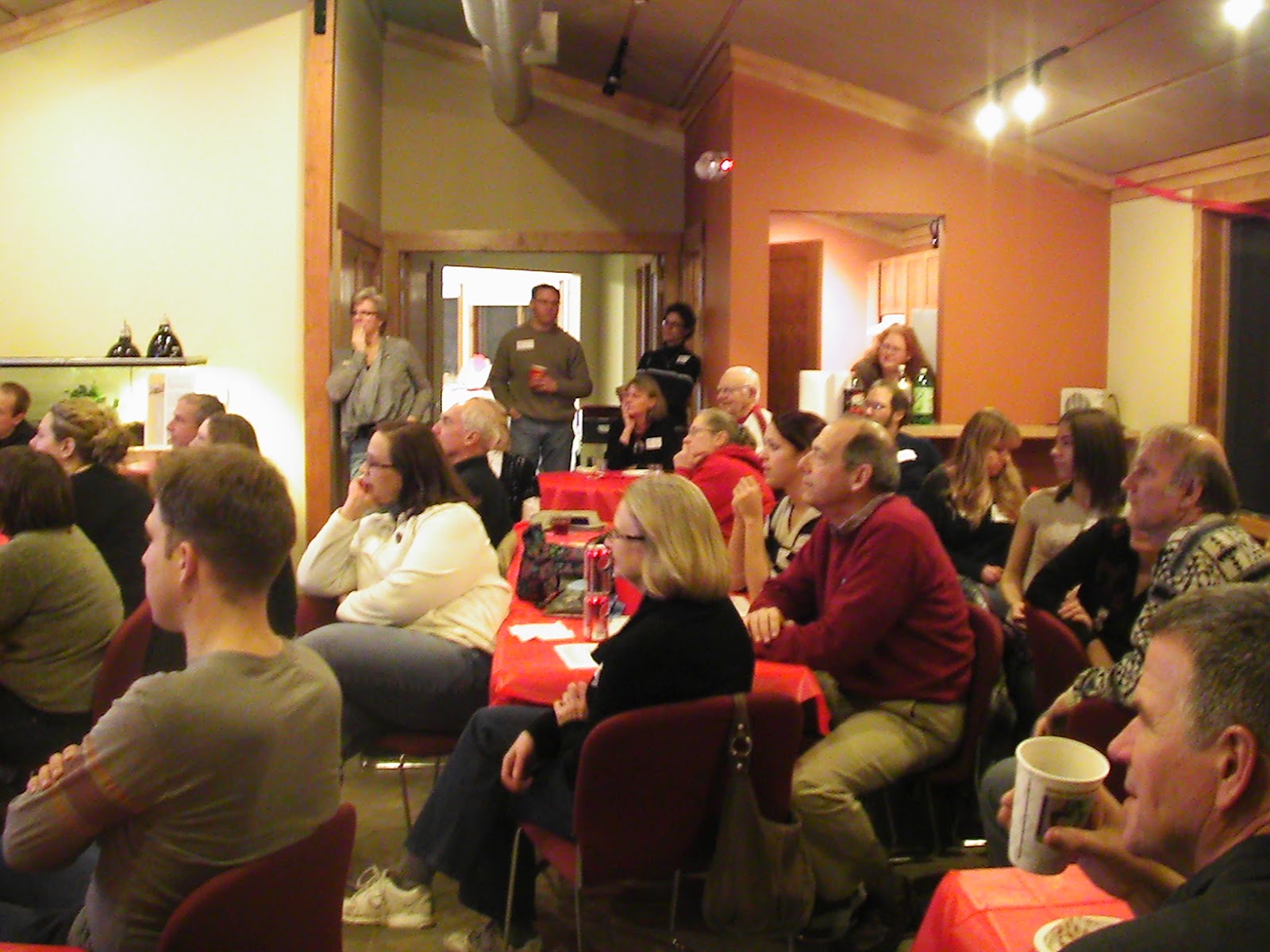
Every January the Wildlife In Need Center holds a celebration to show our appreciation for our amazing volunteers. This party is all about our volunteers and recognizing the hard work they do all year long. This year we were excited to host the party in our own gathering room here at the center!


The night is filled with food, drinks and lots of fun. Staff gives a presentation thanking all our wonderful volunteers and also awards the new Volunteer of the Year. This year the award went to Christine Fuller. Christine’s 2011 hours totaled 244.5 hours (average volunteer will clock in about 200 hours per year). Since becoming a volunteer in 2009 she has come to WINC with a wonderful attitude every shift; lifting the spirits of both staff and the resident ambassadors. Staff is lucky enough to encounter her wonderful attitude twice a week. Christine is here at the center every Saturday morning and has stepped up to help on Tuesday afternoons since the beginning of last summer. She gives incredible kindness to our patients and her fellow team members. Her heart has a big warm place for wildlife and it shows! Christine also helps at other WINC events including our dog cookie cutting party to make cookies for the World’s Greatest Cookie Sale.

Christine is dedicated, reliable, and has a great attitude. The center would not be the same without her and we are very grateful to have her as part of the Wildlife In Need Center’s volunteer team.  Thank you, Christine for all that you do. Congratulations on being 2011 Volunteer of the Year!

Interested in volunteering? The center is always looking for more volunteers! We have volunteering opportunities in animal care, grounds and maintenance, office, phones and admissions, baby bird feeding. For more information call the center at (262) 965-3090. We offer volunteer orientations once a month here the center to give you an idea of what we’re really about.
RSVP for a volunteer orientation today!
Tuesday, February 28th from 6:30-8:00PM
Tuesday, March 20th from 6:30-8:00PM
Tuesday, April 17th from 6:30-8:00PM

 
This could be you!

Guest Blogger M.F.

Saturday, February 18, 2012

And An Owl In A Pear Tree

Once upon a time we received a phone call from a woman who had an Owl in her pear tree. This owl, she claimed, “must have been injured,” because she had seen it in nearly the same place both the day before as well as today and she was afraid to go outside because of it. We did our best to explain that even if there was something wrong with the owl it wouldn’t pose a threat to a grown adult while it was in a tree and we tried to gather more information from her as to what more was going on to give us an idea if there really could be something wrong with it.

After a short time it was obvious that the caller was coming at the situation from a much different place than we were and was unwilling to provide us with anymore of the information we needed.

The following day, the adult children of this same woman called and tried to tell us the same story of the owl in the pear tree. When I encouraged them to approach the tree to gather more information the same as I had suggested the previous day however, the owl flew away just fine!

The reason I share this story is just an excuse to talk about the fact that baby season is just around the corner and the earliest babies are already being prepared for by their Great Horned Owl parents!

Each year we admit as many as half a dozen or more “owlets” because of strong spring storms and poorly built nests. This is the situation that Dakota was faced with when he was a youngster. As much as he has become a part of the Wildlife In Need Center and who we are over his 11 years with us, his true and ideal place would have been the freedom of living as a wild owl. Because he was taken from his family that blustery spring day rather than brought to a rehabilitator who could’ve reunited him with his family like we do with the owlets we admit, he will never live that life.

Just a reminder that when you find an animal you think needs help, make your first step a positive one and contact your local wildlife rehabilitator before you do anything else!

This puff-ball can't get back up into his parents' nest without a little assistance. This is not a safe place for someone like him to be so if you see this situation, give us a call
An experienced volunteer is gently gathering up the owlet to bring to the Center for evaluation. Once we've determined that there are no injuries we will send out re-nesting volunteers and staff to reunite the babies with their family.
Owlets that are a little larger and more feathered like this one are called "branchers." These little guys may be capable of hoping and gliding enough that if found on the ground they could get back up into the lower branches on their own. If they can't do so in a reasonable amount of time however, always call a rehabilitator for advice 

An Owl Re-nesting Volunteer climbs the tree armed with a new "nest" to install for the owl family
Thank you for caring!

Wednesday, January 25, 2012

Raptor ID

For those of you who followed his journey, you can imagine, we received a lot of phone calls about possible sightings of Dakota this past November and December. And in investigating these calls, some of those sightings have been of other raptors than a Great Horned Owl. There are many field guides to birds available which are much more complete, but we thought we’d give you a quick reference to some of these common raptors.


 Dakota is a Great Horned Owl. 22” tall, 44” wingspan, 3.1 lb. Note yellow eyes, ear tufts, white throat patch and horizontal bars on chest as markers. As with all raptors, females are approximately 25-30% larger than males. Dakota is kind of little even for a male. Great Horns are the most common owl in Wisconsin and our largest owls – except when Great Gray Owls or Snowy Owls occasionally come south from Canada in severe winters or lemming population crashes.


A caller was certain they had Dakota. They had an Eastern Screech Owl that had a fractured right furcula (wing bone) and blood in its right eye probably from trauma like being hit by a car or flying into an object. Screech come in 3 color phases : red, brown and gray. 8.5” tall, 18” wingspan, 6 ounces. Note the ear tufts but no white throat patch and much smaller size. But Screech Owls don’t know they are small- Screech’s are very feisty birds.


Barred Owls are our 2nd largest owl common in Wisconsin. 21” tall, 42” wingspan, 1.6 lb.
Note the black eyes. Years ago we got a baby Barred Owl in as a patient and one of our volunteers gasped that it was blind when she saw it. She was used to the yellow Great Horn eyes. No ear tufts, more pronounced facial disk, vertically streaked chest and belly. Even though barred are almost as large as Great Horns in height and wing span, they are about half the weight. These birds are very fluffy.

We also have Short-eared and Long-eared Owls in Wisconsin but they are not as common owls. We may admit one every couple years at WINC. Note that all these owls are stocky with round heads, very little neck definition, and short squat tails. And their heads are big in comparison to their bodies. Owls can see and fly in daylight although they prefer to sit on a branch next to a tree trunk and snooze the day away. If disturbed from their roost by crows, people or activity they will glide away to another location. If owls are having trouble finding food due to inexperience, lack of local food sources, or illness or injury which hampers their hunting, owls will be active in the day in addition to the night looking for food. If you see an owl active in day for several days, that owl may need help. Please call WINC or a wildlife rehabilitator in your area.


We had several calls that Dakota was at the intersection of C and 18, just down the road from our current and our old location. Was he trying to come home? Staff and volunteers have raced to the scene to find a Red-tailed Hawk sitting on a pole. Red-tails are our most common raptor in Wisconsin and we regularly admit them as patients. They often hunt on the roadsides and can be seen often along I-94. Because the ditches are mowed to maintain the roadways, the vegetation that grows there is constantly growing back. That tender new vegetation attracts prey species like Eastern Cottontail rabbits, 13-lined Ground Squirrels and Eastern Chipmunks to feed. The shorter vegetation also makes prey easier to see than dense underbrush. And some of these prey animals get hit by cars and Red-tails are resourceful enough to take advantage of the roadways for all these reasons. Hawks in general are taller and slimmer than owls. They have smaller heads in proportion to their bodies than owls and more pronounced neck and shoulder definition. Red-tails have a white to cream colored throat, chest and belly with faint mottling if any at all. They will soar or sit out in the open in daytime because they are hunting by sight. Red-tails are 19” tall, 49” wingspan, 2.4 lbs.

We began our blog originally to help educate people about native Wisconsin wildlife. When Dakota’s ordeal began it quickly turned into Dakota watch. Throughout the past few months, people have become more aware of owls because of the media stories about Dakota. Not only are we extremely happy for his safe return, he is still teaching people about wildlife even though he has not yet begun to work again!

Dakota, meanwhile, continues to remain well. He loves mealtime and spending daytime hours outdoors so that he can watch the antics of our resident birds and squirrels.

Guest Blogger L.R.
Friday, January 20, 2012

Dakota's Fan Mail

Dakota's "wall of fame" was a place that gave many of us hope in the days and weeks before his return home
Since Dakota’s ordeal began back in the middle of November 2011 the center has received an outpouring of support for both Dakota and the center’s mission itself. One of our favorite forms of support and encouragement came in the form of “Dakota fan mail”.

Children and adults alike sent their well-wishes for Dakota's safe return home. Many were among the 80,000 people that Dakota has educated since becoming a part of the Wildlife In Need Center

The center received cards and letters almost every day addressed to Dakota. (Most included staff and volunteers, but some were just for Dakota!) Cards came to us during every stage. The first cards we got were cards of encouragement for the center to find Dakota and hopes of a safe return. Once Dakota was recovered the get well cards flooded in for Dakota with wishes of a full healthy recovery. Finally, Dakota received cards from people thanking him for all he taught them through his ordeal.


Some of the center’s favorites came from kids and students Dakota has educated over his 11 years of working with the center. 


We wanted to share with you some of these wonderful cards we received. The cards and letters made us smile; we hope they do the same for you.


He even received a packet of get well wishes from second grade students in Ohio that were studying owls when word got down to them about Dakota! Even though these students had never personally met Dakota, because he helped them learn about his wild counterparts they affectionately called him “their mascot.” How amazing!


Students from Ohio who followed Dakota's ordeal via the internet sent him their best wishes for his speedy recovery, calling him their "mascot." He's ours too!

We would also like to take this opportunity to again thank EVERYONE for their overwhelming amount of caring and support for Dakota and the center. Daily words of encouragement were very much appreciated by staff and volunteers as we rescued and cared for Dakota.


Guest Blogger M.F.

Friday, January 13, 2012

Why Doesn’t Dakota Stay Inside All Winter?

Over the years many people have asked the question of whether or not Dakota comes inside in the winter. Now that he’s been inside during his recovery we've gotten the question as to why he would live outside at all.

The simple answer is for his health and well-being. Being exposed to the sun and weather actually helps him maintain good plumage. Exposure to sun also helps him to synthesize vitamin D for his bones, muscles, and eyes and is important to his overall health.

Being outside is necessary for Dakota’s mental health as well. Because he is a Great Horned Owl, and his wild counterparts stay here all year long, they are not only used to the changing temperatures, but are designed to withstand them. Dakota has a covered nest box in his enclosure to provide shade in summer, shelter from rain, and protection from snow and cold winds in winter. He also has multiple perches of various sizes and materials around his enclosure to choose from. But he still sometimes prefers to sit on an exposed perch in all sorts of what we would consider bad weather because he can. Being outside as much as he is, his body acclimates to the change in temperature gradually. In fact, in the past, when Dakota was indoors for programs, especially in the winter, he would often get overheated if kept inside for too long.

Dakota is spending some time getting fresh air and enrichment during the day
While it will still be some time before Dakota moves back outside on a regular basis, being outdoors is good for him. Although many of us consider him a colleague, he is still a wild animal, and being so, he enjoys the variety of the weather, the amusement of watching the birds, squirrels and other animals outside his window, and having some space to himself – most of the time. The enrichment of being outside in our outdoor habitat area watching local animals-squirrel and songbird tv, "talking" with our local owls and also with our staff and volunteers who are outside often caring for patients and other permanent animals is necessary for his overall well-being.

Friday, December 30, 2011

Dakota took another big step Tuesday - he moved from the small enclosure he has been in for the last 3 weeks to a much larger, completely indoor aviary! He has finally reached a weight that allowed his vet to give the "ok" for him to move. He still has some weight to gain before being at his normal weight, but he's getting closer. Also he was able to have his first fully furred whole prey meal which he finished in under 30 seconds...he loved it!


The indoor aviary Dakota was moved to is a new feature of our new building; it can hold temperatures independently of the rest of the building. This will allow us to very slowly decrease the temperature of the room to get Dakota to adjust to the outside winter temperature before actually moving him outside. This will be a slow process, but we are thrilled about the big steps Dakota continues to take forward!

Sunday, December 18, 2011

What is a pellet?

For those of you who’ve been watching Dakota’s progress you probably noticed that once he started eating solid foods he also began casting pellets. What, you might ask however, is a pellet?

Owls and other raptors, as you may know, maintain a diet primarily, if not exclusively, of protein. In other words, they eat other animals. Raptors are unlike humans who can cut, cook, and otherwise prepare our food to eliminate the indigestible portions. They also differ from carnivores like wolves that can tear the meat away from indigestible things like bones. They often feed on small animals like rodents and smaller birds. Weeding out the digestible from the indigestible parts of small animals like these when you only have a beak and talons to do so with isn’t always easy. The solution that raptors have come up with is casting pellets.

As a raptor digests its meal, its body separates these indigestible parts such as bones and fur. This material binds together and is later expelled through an action that very much looks like the bird is vomiting. They are not vomiting however, and it is not the same thing as a cat expelling a hairball either. Many people at one point in their lifetimes, whether it was in science class or just for fun, have dissected owl pellets. If you haven’t had the pleasure, these pellets appear as small forms of bound up fur. Often you can see small bones if you look closely. For those with strong stomachs we’ve attached the proof that Dakota is eating well and progressing better than we could have hoped for.

Dakota’s veterinarian plans to do another thorough exam on Monday complete with further blood work. We hope for good news from analysis of the results and will be sure to pass it along as soon as we can.


Dakota began casting pellets (complete ones) only two days after beginning solid foods
(the first note looks like it says 2/15/11 but it actually is 12/15/11)

On Sunday, December 18th, Dakota cast his 4th pellet! This is holiday cheer for those who work with wildlife!

When examined closely, you can find bones from small animals bound up in the fur. This is Dakota's 3rd pellet, in which you can see small bones from the mice he began getting on Tuesday, December 13th

This display was made for WINC to use for display and educational purposes. It shows examples of some of the things you might find if you were to dissect a typical pellet

Tuesday, December 13, 2011

Dakota has had his first meal!

The results from Monday’s blood tests were mostly positive. While not all of his levels were improved, he was given the green light to begin introducing solid foods today. The levels that have not improved point to a continued need for caution however, the improvement is welcome news to all those hearts that have gone out to the ambassador bird over these past several weeks.

After his rescue last Wednesday, December 7th, Dakota was examined by Wildlife In Need Center staff who felt that he was dehydrated and very thin. Dakota had lost a total of 27% of his body weight, eliminating not only his fat reserves but moving on to deteriorate his muscle tissue as well. He was given a full physical exam by his veterinarian who also drew blood for testing and oversaw the administration of subcutaneous fluids. Results from these blood tests confirmed his fragile condition. His PCV (packed cell volume) levels were low enough to consider Dakota slightly anemic and his elevated kidney values also confirmed his dehydrated state. Additionally, on Thursday a fecal test was run. The negative results of this test ruled out the existence of any parasites that his already weakened system would have to fight off during recovery. The complete results from this examination made it clear that Dakota was at risk of suffering from refeeding syndrome. Because of this he was prescribed a treatment plan of fluids only.
On Saturday, December 10th, Dakota’s veterinarian completed another exam. She determined that his hydration levels were increasing enough to begin introducing a liquid diet. This liquid diet was given both Saturday and Sunday in conjunction with subcutaneous fluids.

Dakota gets another thorough examination with staff and his veterinarian Monday
Monday showed a slight improvement in Dakota’s behavior and attitude and cautiously positive results from blood tests were graciously accepted. While Dakota enjoyed his first few bites of solid food since his return, he’ll still be guarded closely for the next 24-48 hours to ensure that his debilitated system doesn’t react poorly.

Friday, December 9, 2011

Dakota's Home: An update to his supporters

Dakota definitely knew his rescuers. Thanks to the dedication of WINC staff and volunteers Dakota was finally rescued on Wednesday morning. Upon his return home, Dakota was examined first by staff and then by his veterinarian. It was determined that he was very thin, having lost more than 25% of his body weight, very dehydrated and weak.

Due to his state, Dakota is being kept on cage rest under staff supervision.

While Dakota has made it through the first 48 hours and has not shown any decline in his condition, he still has a guarded prognosis. We can never fully know what he has seen and done over the past few weeks, but are providing him with the best care possible now that he is home.


It's clear he's exhausted and still easily stressed. Because of this and his need for fluids and medical care several times daily, we are not allowing any visitors, media, or photography that could cause him further distress.

Thank you, once again, to everyone for their thoughts and wishes for Dakota. As of today he is still being monitored by staff, and still an a fluid diet. Based on the care his vet has prescribed we will not likely have any significant updates on his condition until Monday.

Until then, thanks for caring.

Wednesday, December 7, 2011

Dakota Returns Home

Dakota has been rescued and is now safely back home. At 7:30AM this morning staff contained the beloved Great Horned Owl whose 3 week ordeal is now over.


At 6AM staff was contacted by the homeowner of a site that has been under surveillance for over a week. Dakota was seen on the rear deck and was still there when staff arrived at 6:30AM.

When approached, Dakota flew off to a tree, flying low to the ground the entire distance. After several more lower, short flights between homes, trees, and fences in the area, he landed on the railing of a nearby home. One of our staff members was able to slowly approach up the stairs and after an excruciatingly long few moments, was able to safely contain him. After successfully securing him for the ride back, Dakota was finally returned home.

He is resting and recuperating after being examined by his veterinarian earlier today. (we are extremely grateful for the hours volunteered by Dakota’s Veterinarian, Dr. Waliszewski and others who assist us with both resident and patient animals all year long) Dakota returned very dehydrated and thin, but has likely been able to find some food to survive. We are still waiting for results from blood tests to determine if he has other health problems that will need to be addressed.

Dakota will be monitored and cared for, including fluids, for the next week before another evaluation will be completed to see if his condition is improving. Obviously, his physical condition as well as his temperament will determine when he will be able to return to programs and resume his position as the Wildlife In Need Center’s ambassador. We are grateful to have Dakota back where he is safe and only he can determine when he will be ready to return to work.

Thank you to everyone for their support and concern over the past several weeks. Keep watching this blog for updates as Dakota's recuperation continues.

Saturday, December 3, 2011

Increasing Dakota Awareness & Education


This has been a very busy week for us at WINC, due in large part to our efforts to continue to reach out to the community and increase awareness of Dakota’s situation. We know our efforts are working, because we have been contacted by so many new people who have reached out to us: people who have just started following our blog & our facebook page, people who have now seen our flyers and heard about our search locally, and people who are becoming aware of Dakota from news stories and the internet. It is an amazing thing to see, just how many people have been touched by Dakota’s plight, and the awesome distances his story has traveled. We have been getting calls from as far away as Canada, from people who want to share information with us & help us in any way they are able, and to contribute ideas to our efforts to see Dakota home once again. It cannot be overstated how heartened we are for the continued well wishes and positive support we receive. If there has been any upside to this sad situation, it has been the constant stream of caring we have been blessed with. We are humbled by the generosity of spirit the community has for Dakota, and overwhelmed by how he continues to educate, even during this current situation.

As a part of our education and outreach efforts, we would like to remind everyone that during this difficult time for WINC, one of the things that is of the utmost importance to us is that we return the respect we have received. We are ever mindful that we want our impact on the community to be a positive one, and ever mindful that the example we set in our search methods allows us to achieve maximum impact with a minimum “footprint”. We are striving to be very respectful of the people who live in the neighborhoods we are searching in, and are therefore keeping our search parties small and quiet in nature. We are so very grateful for the opportunities we have been given to search on private property with permission, and wish to publicly thank everyone who has so graciously allowed us to continue searching on their land. We are also grateful that everyone who has offered to help us search has continued to contact WINC before acting alone, and has allowed us to take the lead on any organized searches. This in turn has allowed us to conduct ongoing searches with minimal disturbance to the community, and maximum respect to it.  No search parties organized by WINC will ever venture onto private property wihout permission.

We are also mindful of the impact our searches have on the environment, and mindful that we continue to fulfill our core mission of helping wildlife in need, and not creating any in the process by disturbing the existing balance. We have been very careful not to create nuisances, both by being selective of where we place our feeding stations, and not disturbing the patterns of existing wildlife in any of the areas we are searching. Above all else, we would never want our efforts in our search for Dakota to bring any harm to the existing wildlife in the areas we are searching. We take extreme care not to harass any wildlife in those areas, and to be respectful of their habitats & not disturb them. Again, we want to thank everyone who has chosen to help us to watch out for Dakota for the care they have also taken and continue to take, to always be respectful of the wildlife that lives in those areas. Though we have stated it in our poster, it bears repeating: if you spot a Great Horned Owl that you believe to be Dakota, please, please, PLEASE do not approach him or call to him.  Please watch him closely while being extremely quiet, and contact the Wildlife In Need Center immediately. Dakota will respond to his handlers, and may be frightened by people he does not already know and is comfortable with.  We would not want anyone to inadvertantly further traumatize Dakota, or unduly traumatize any other owl(s) in the area who might be mistaken for Dakota.

During this past week we have continued to hand out informational flyers during our daily foot searchs, and have followed up on many leads from people who have reported hearing owls in their area. Unfortunately, we still have not been successful in pinpointing Dakota's exact location. We have heard owl calls from time to time, but not always received responses that we could definitively identify as Dakota’s. We have made some minor changes to the locations of the feeding stations, but still have not seen any measurable evidence that he is visiting them. Even though it may seem obvious, one of the things that people sometimes forget is that, even if he is not catching live prey, Dakota will eat dead animals. And even if he is not visiting the feeding stations to do so, he may be finding other food in that manner. We remain optimistic that Dakota is eating on his own.

We also remain optimistic Dakota remains in the general area. There is a statistic on released owls that points to most of them staying in a 5-mile radius from the area they are released in. As we know the approximate area Dakota was in when he escaped his captors, we have a fairly good idea of the areas we need to be most watchful for him in. Additionally, part of that range for us includes both our current building and grounds, and our old building. We have had many people ask, and yes---we do search the premises around our old building on a regular basis, on the chance Dakota has found his way back to that area.

The most important thing that we want people to remember is, we have not given up on our efforts to locate Dakota. We absolutely believe he is out there, and we will absolutely continue to search for him, and continue to raise awareness of him throughout the community. The eyes and the ears of the local community are one of the greatest resources we have available to us.  We have know from the very beginning that this would not be an easy process, but we remain committed to bringing him home. He is such an important member of our family, we are not whole without him.


Please continue to help us to find Dakota by remaining observant and vigilant especially when you are in the Dousman/Hunter’s Lake area. We have an improved version of our original flyer available & attached to this blog for download. We've added some specific information about Dakota's behavior and habits that we hope will prove helpful in further increasing education & raising awareness of Dakota in the local community. As previously mentioned, we’d like to again invite everyone to please feel free to print out the picture of the flyer included with this blog and post it-----WITH PERMISSION = please do not post it or distribute it unless you have the expressed permission of any given property owner, business, school---etc. 
((Reminder: it is ILLEGAL to place flyers in mailboxes.))

Thank you for your continued support of Dakota, and of WINC. Please continue to keep the faith that he remains strong, and will be home with us again soon.


(Guest Blogger K.P.)


Tuesday, November 22, 2011

Dakota Update---11/22/11


Everyone has been so wonderful in being patient and allowing us to continue to focus our efforts on bringing Dakota home, and we are so very grateful for that.  Much of our current resources---in addition to continuing to provide constant care for our patients & continuing to keep our clinic properly staffed---are devoted to our recovery process, and continuing to evaluate that process & consult our resources within the rehab community.  It’s not always easy to have the additional resources to compile and publish daily updates on Dakota, and when we do provide updates, we want to make sure that we are giving you the most current and correct information.  Our sincere appreciation goes out to all of you for your continued patience, well-wishes, positive energy & prayers.  You are awesome.

Over the past weekend, staff went out multiple times and are pretty sure they heard Dakota on several occasions (tho he was not positively sighted).  This is still a very positive sign.  There are also now two feeding stations up.  Neither seem to have been visited yet, but staff will continue to check the feeding stations and continue to try to locate Dakota by calls at night.  We’re again asking everyone, please do not attempt to locate Dakota on your own. People he is not familiar with will frighten him (and, we want to again caution everyone about hunting season; it’s unsafe to be walking around the area we believe him to be in).  Thank you to everyone who’s been respectful of us & Dakota during this time.  The most important thing you can do for us is to please continue to keep Dakota in your hearts & have faith, and continue to be patient….this is not an easy process, and it is not going to be a quick process.  But we remain very optimistic, and are working hard to bring Dakota home.

Additional positives of our current search include the fact that we are still actively and regularly hearing 2 Great Horned Owls in the area we believe Dakota to be in.  Staff will be moving one of the feeding stations down into a lower area where we believe he has settled down in to get away from the wind (Dakota does not like the wind or rain).  Although he may be eating on his own (and we of course absolutely hope that he is), if he is not, he may be just starting to get hungry.  The most positive aspect of his current feeding situation is that Dakota was in great condition when he was taken.  He is healthy, strong, in excellent feather, and was extremely well-fed.  The extreme cold weather has not yet reached us, and that will allow him to further conserve his energy & bulk.  Because of these factors, we are able to be very grateful that we are blessed with the time and resources to continue to try and lure him in without further traumatizing him.  These are all very hopeful and positive assets!

Thank you all again for caring so much about Dakota.  It is so heartening to us that there is so much love in the community for him, and that he has—and continues—to touch so many lives.  Please continue to remain patient and ever hopeful that we will have him home again soon.  We will do our very best to provide regular updates, when we have developments to report.


(Guest blogger K.P.)

Friday, November 18, 2011

Updates---


Our latest updates regarding our attempts to lure Dakota to the feeding station we have set up are as follows:


Thursday Nov 17
The feeding station was checked on Thursday morning, and all of the mice we had offered were still there. Staff did some calling and walking in that area, but heard only crows.  There were no significant signs that any other animals had visited the feeding station.

Friday Nov 18
The fresh mice put out at the feeding station the night before remained untouched this morning.  Some faint hooting was heard, but Dakota was not sighted.  Several dogs could be heard barking in that area, which made it difficult to determine which direction the hooting was coming from.

Staff is continuing to visit the feeding station and the area nearby on a regular basis each day.  Because we believe we have sighted and know we have shared vocalizations with Dakota in that area, we continue to remain hopeful that we will be successful in luring Dakota down from the trees to the feeding station, and that we will be able to see evidence he’s in that area on the trailcam that the homeowners who are assisting us are monitoring.  If we have any significant updates regarding our progress in these areas, we will post an update on the blog and/or our facebook page.


Thank you all again for the tremendous support you have shown and continue to show the center.  Please continue to join us in praying for the best possible outcome for Dakota---that he is back home once again with his family at WINC.  We miss him terribly, more than words can express.  Your positive energy and well-wishes mean the world to us right now.


Additionally, we wanted to let everyone following Dakota’s situation know, we appreciate the concern that has been expressed regarding the security of the grounds and the building at the current WINC location.  As always, our foremost concern is for the safety & well-being of the animals we treat and house at the center, and for the staff and volunteers who spend such a substantial portion of their time caring for those animals.

WINC is looking at increased security measures in light of our recent break in and theft of Dakota.  Because we are on UW-W property, we are working directly with the university system to discuss ways to increase security for the property in general. Our original plans for the building and our compound was to install security cameras & also use the same camera system to put cameras on patients and educational animals. Ultimately, we would like to be able to set up monitors in the public “Gathering” educational room so that visitors can see the animals, without disturbing the animals. These cameras would also help Animal Care staff evaluate and monitor patients by watching them when the animals don’t know they are being observed (with the hope that the animals would behave and move about as they normally would, without the added stress of human interaction). Winter weather this last year caused construction delays and increased costs for the building, so the camera project had to be put off until we can raise sufficient money to complete it.   We remain focused on continuing to secure adequate funding for that camera system, as well as for additional lighting, and also some physical changes to the building itself to increase security now. We have been asked repeatedly by our supporters and the public if there are ways in which they can help, and we are accepting donations from anyone who wishes to help us meet our goals with this project.  Every donation we receive helps us in our greater goal of providing care and comfort to the animals we treat.

For obvious reasons, it wouldn’t be in the center’s best interests to go into specifics on our blog or our facebook page of the exact details of every measure we are taking to add to the center’s security, because we would not want any other intruders to know what they might face if they come here. However…..one suggestion has been to deploy “Daphne”, our Educational Muscovy Duck, to patrol the clinic at night – anyone who knows Daphne knows she would make her presence known to any potential intruders J


(Guest bloggers L.R. & K.P.)

Wednesday, November 16, 2011

A Hopeful Progress Report


We wanted to check in again & update everyone on our progress in our search for Dakota.  

Search parties were out all day and early evening Tuesday, south of Hunters Lake/Dousman. We had several sightings and vocalizations. We’re secure in our belief that Dakota is in that area, as he has responded to Leslie’s voice several times and we recognize some of his “special” vocalizations. We were confused initially by sightings and vocalizations that seemed to be in different areas, sometimes at the same time. We now feel there are 2-3 owls other than Dakota in the area: a youngster from this year who makes begging cries for food when staff hoots, and 1 or 2 adults who are probably its parents.

We’ve had so many offers of search help, and want to again express how very grateful we are for the kindness and caring of everyone who has been touched by Dakota's plight. After several searches over the past few days, staff has decided that the best approach is to just attempt recovery with staff members, who Dakota is the most familiar with and comfortable around. We are also very mindful that we don’t want to lose our permission to search on these private properties by becoming a nuisance.  We think our best chance of recovery is with people Dakota knows well, especially since he is so traumatized.  We don’ t want anyone not familiar with (or familiar to) Dakota to try to grab him and be inadvertently hurt, or further scare Dakota. So at this time, we would ask that everyone (including our Animal Care Volunteers) stop going to this area, and not call or look for Dakota. If our staff members are the only ones calling for him, he is more likely to come to staff. But we want to again express how very grateful we are for all of the help we have already received and all of your generous offers.  We are blessed to be surrounded by so many people who care so greatly about Dakota, and bringing him home.

We did want to additionally remind everyone, in the further interest of public safety: deer gun season starts this Saturday, and there are several deer/tree stands in the woods where Dakota is staying. It’s too dangerous for any one of us to be moving in the woods even with blaze orange, and we need to respect the hunter’s rights.  But one house nearest to Dakota has generously agreed to let us use their yard as a feeding station & set up their trail cam on it. Even though owls in the wild do not eat every single day, without likely having eaten for several days now, Dakota is going to be getting very hungry. Staff is going to call from that feeding station starting Wed afternoon/night to draw Dakota to that area which we can safely access during hunting. Once Dakota starts feeding there, we think he may come to us, or we can utilize raptor traps.

As always, we simply cannot thank everyone enough for their kind wishes and help. We are especially grateful to the people who reported the Facebook page to the Waukesha County Sheriff’s Department, and to us. That was the tip that led to the arrests, and to the information on Dakota’s location. I know some of the people I talked to wanted to be anonymous because they were worried about retribution from these suspects and their friends. It was courageous of them to report the information.  

Thank you all for caring about Dakota, and please keep him in your thoughts and prayers.  All of the positive energy everyone has been sending our way is so very, very appreciated.


(Guest Bloggers L.R. & K.P.)

Tuesday, November 15, 2011

An update on Dakota...


We wanted to take the opportunity to once again thank everyone who has been so kind and generous in your support of the center and our beloved Dakota.  Please continue to send your prayers, well wishes, and positive energy our way. The outpouring of local & state community support from our friends, our volunteers, the public who has been touched by Dakota, and the wildlife rehabilitation community at large, has been overwhelming---and appreciated more than we can say. Thank you all for keeping Dakota in your hearts.....Dakota is our heart and soul.  He is such an important member of our family.  Our greatest wish is to have him home and safe.

The most up-to-date information we have is detailed in the latest JSOnline article: http://www.jsonline.com/news/waukesha/searchers-looking-near-dousman-for-stolen-owl-ef32mna-133914393.html  We have had a number of people contacting the center with offers to search & questions about sightings in various spots in southeastern WI. Dakota is believed to be in the local area. If you live in the Dousman area, please continue to keep your eyes open for a great horned owl wearing jesses (leather straps like leashes, 4-6 inches long, on his ankles), or acting strangely. Dakota is fully imprinted on people, and our hope is that he would therefore be more likely to appear "tame", and more readily visible than an owl who is fully wild (and therefore more instinctively shy of people). 

We are thankful and so grateful for the many offers to help search.  At this time, we are limiting searchers to our staff and trained wildlife volunteers that help at the Wildlife In Need Center. We are searching on private property with permission and do not want to lose that permission by being too much of a bother. This must be terribly traumatic to Dakota, to be attacked by strangers the way he was, and to be loose and alone in an unfamiliar area.  We feel people he is familiar with will have the best chance of recovering him.  Additionally, because he is a Great Horned Owl, he could possibly hurt someone from fear if someone unfamiliar with raptors tried to handle him. We are so very thankful to everyone who has contacted us offering to help. There are more good people in this world than bad and that’s inspiration for all of us.

Please continue to contact the facility at 262-965-3090 with any sightings in the local Dousman area. Please also continue to contact the Waukesha County Sheriff's Department at 262-548-7126, if you have any information regarding the theft of Dakota.

Thank you all so very much for caring about wildlife, and about bringing our Dakota home. People have contacted us from all over Wisconsin, and are reporting seeing or hearing owls they think are Dakota. Many say they have never seen or heard owls in their area before.  Dakota and the Wildlife In Need Center are still educating people about owls and other wildlife, and we will never stop.  We would also like to offer our most sincere thanks to the Waukesha County Sheriffs Department for their quick action and for treating this crime as seriously as they have.  The Wisconsin Department of Natural Resources has also been most helpful to us, and is looking into the case as well.


(Guest Bloggers LR & KP.)

Sunday, November 13, 2011

*** ALERT = Important, Please Read ASAP ***

The Wildlife In Need Center is a small non-profit 501c3 organization that offers free medical care to orphaned and injured wildlife with the intent to release back to the wild.

Last night on November 12th, someone broke into our outdoor compound and three of our outdoor cages.  One of the cages housed our main animal ambassador, Dakota, a great horned owl.   Dakota was taken by the thieves.

Dakota is 11 years old and has lived in captivity all but the beginning of his life. Someone kidnapped him as an infant, prior to his coming into our care. He is fully imprinted on humans and can not fend for himself or hunt for food on his own.

Dakota has reached approximately 80,000 people in his educating career not including those through the media via the newspapers and TV. He appears at over 100 programs a year making an impact on girl and boy scout troops, adult charitable organizations, schools, senior citizen facilities and special needs groups.


PLEASEif you see or find a great horned owl with jesses (leather straps that would be dangling from his legs), or see an owl that is acting very friendly please contact the Wildlife in Need Center at 262-965-3090, your local humane society, or the Waukesha County Sheriff’s department who is investigating this theft.


Many children and adults have already planned their year end holiday celebrations around Dakota, and his message has always been to promote the positive things that the Wildlife In Need Center does for wildlife and the people that live with them.

Thank you for any information or help that you can provide,
to bring Dakota back home to us.


Thursday, October 20, 2011

Come Gather with Us

Change can sometimes be good, sometimes bad but the changes for our Education Department is GREAT! Moving into our new facility is opening up a wonderful new component for education. In the past our educational leaders and the animal ambassadors would and still do travel to your location of choice for an educational program. With our new Gathering Room we can offer educational programs on site. On October 20th we offered our first in house program to the Passage School students at Lad Lake. What a great experience we had not only the kids but also myself. With this new room the environment is much more inviting and receptive to an up-close and personal experience with the animal ambassadors that make up the education department. The kids could ask as many questions as they wanted to without any time constraints. Because the ambassadors were at their own home the kids could spend more time with them too. The critters appreciate not having to be packed up one-plus hours before the program and not going out into extreme heat or cold.

Question and Answer time with Dakota the Great Horned Owl

The space itself invites a more natural setting for wildlife education. Our building is surrounded by beautiful pines and prairie fields. You come into the Gathering Area to warm hues trimmed in maple and pine. The room is outlined with our herp educators who would love to inspire you.


Private lessons with Daphne the Muscovy duck

In addition to our programming, if your group or organization is in need of a gathering place give us a call to make arrangements to hold it at our facility 262-965-3090.

Guest Blogger L.K.