Showing posts with label Wildlife Rehabilitation. Show all posts

Thursday, April 26, 2012

A Tale of Two Opossums


Being a licensed wildlife rehabilitator makes you look at your surroundings in a different way than most people. When my husband and I drive anywhere, one of the things we are always looking for is good patches of dandelion greens to pick for the many cottontails we rehabilitate each year and the other being any injured animals that may need our help. One animal specifically we notice are any dead opossums because anyone of them could be a mom with babies still alive in her pouch. As the only marsupial in North America, mom opossums carry their young with them in their pouch for a number of weeks. They can have two sets of babies each season, one in spring and one in fall. That is why between April and October it is so important to check any dead opossums you see on the road (where it is safe to stop and check).

So the story goes that we are always on the lookout. On September 11th we found a great patch of dandelion greens in Ottawa. The following Tuesday morning my husband went back there for more greens and saw a squashed mamma opossum (he could tell because there were scattered dead little ones on the road). To keep anyone who would be grateful for the free meal from being in the way of traffic, he dragged her way off the road and started picking greens. After just a little while he started thinking; he’d seen her dead and all the little ones but didn't actually check her pouch. So, back he went to where he had dragged her and sure enough - one little guy was still hanging on - ice cold but alive. He brought him home, weighed him and tucked him into a box on heat to warm up.


That night, I had promised to release some orphaned cottontails in a friend’s yard in the town of Waukesha, so after work we packed them up and hurried over there. All went well with the release, but now it was almost 7pm, getting dark, and we need greens again for overnight and morning for the bunnies that were still at home. We wondered where to go - look around and waste time, or go back to Ottawa, which takes time to drive to, but where we’d be assured of abundant greens. We decided Ottawa was the best choice, so off we went. I started picking down the road one way and him the other. A little later he came over and said he thought he heard something but wasn't sure. I came over by where he was picking and listened but heard nothing. Then, a little sound, and nothing again. We didn't want to walk around for fear of stepping on any little ones, and needless to say, by now it was getting dark and we really had to keep picking greens. So I got down to ground level and started making mamma opossum sounds and my husband got down and began to make baby opossum sounds. Sure enough, in just two seconds we hear another little baby. He'd been out there all that time and was cold as ice, but we found him and as of this writing, he and his brother are doing really well.

So, it just goes to show you, if take the extra time you may be able to help save a life.

Guest Blogger: N.M.


Photos courtesy of M. Draeger.

Tuesday, February 21, 2012

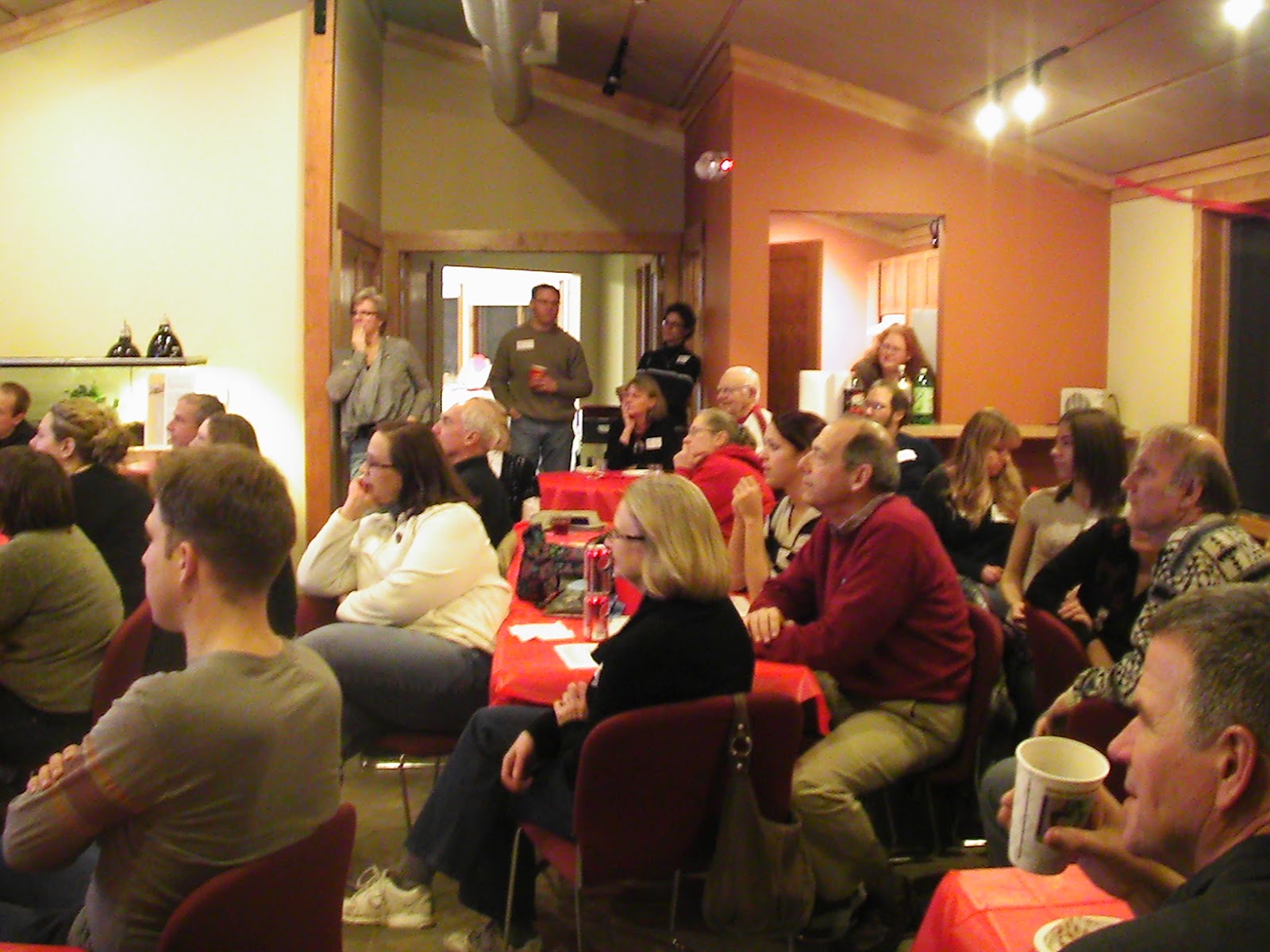
Every January the Wildlife In Need Center holds a celebration to show our appreciation for our amazing volunteers. This party is all about our volunteers and recognizing the hard work they do all year long. This year we were excited to host the party in our own gathering room here at the center!


The night is filled with food, drinks and lots of fun. Staff gives a presentation thanking all our wonderful volunteers and also awards the new Volunteer of the Year. This year the award went to Christine Fuller. Christine’s 2011 hours totaled 244.5 hours (average volunteer will clock in about 200 hours per year). Since becoming a volunteer in 2009 she has come to WINC with a wonderful attitude every shift; lifting the spirits of both staff and the resident ambassadors. Staff is lucky enough to encounter her wonderful attitude twice a week. Christine is here at the center every Saturday morning and has stepped up to help on Tuesday afternoons since the beginning of last summer. She gives incredible kindness to our patients and her fellow team members. Her heart has a big warm place for wildlife and it shows! Christine also helps at other WINC events including our dog cookie cutting party to make cookies for the World’s Greatest Cookie Sale.

Christine is dedicated, reliable, and has a great attitude. The center would not be the same without her and we are very grateful to have her as part of the Wildlife In Need Center’s volunteer team.  Thank you, Christine for all that you do. Congratulations on being 2011 Volunteer of the Year!

Interested in volunteering? The center is always looking for more volunteers! We have volunteering opportunities in animal care, grounds and maintenance, office, phones and admissions, baby bird feeding. For more information call the center at (262) 965-3090. We offer volunteer orientations once a month here the center to give you an idea of what we’re really about.
RSVP for a volunteer orientation today!
Tuesday, February 28th from 6:30-8:00PM
Tuesday, March 20th from 6:30-8:00PM
Tuesday, April 17th from 6:30-8:00PM

 
This could be you!

Guest Blogger M.F.

Friday, January 20, 2012

Dakota's Fan Mail

Dakota's "wall of fame" was a place that gave many of us hope in the days and weeks before his return home
Since Dakota’s ordeal began back in the middle of November 2011 the center has received an outpouring of support for both Dakota and the center’s mission itself. One of our favorite forms of support and encouragement came in the form of “Dakota fan mail”.

Children and adults alike sent their well-wishes for Dakota's safe return home. Many were among the 80,000 people that Dakota has educated since becoming a part of the Wildlife In Need Center

The center received cards and letters almost every day addressed to Dakota. (Most included staff and volunteers, but some were just for Dakota!) Cards came to us during every stage. The first cards we got were cards of encouragement for the center to find Dakota and hopes of a safe return. Once Dakota was recovered the get well cards flooded in for Dakota with wishes of a full healthy recovery. Finally, Dakota received cards from people thanking him for all he taught them through his ordeal.


Some of the center’s favorites came from kids and students Dakota has educated over his 11 years of working with the center. 


We wanted to share with you some of these wonderful cards we received. The cards and letters made us smile; we hope they do the same for you.


He even received a packet of get well wishes from second grade students in Ohio that were studying owls when word got down to them about Dakota! Even though these students had never personally met Dakota, because he helped them learn about his wild counterparts they affectionately called him “their mascot.” How amazing!


Students from Ohio who followed Dakota's ordeal via the internet sent him their best wishes for his speedy recovery, calling him their "mascot." He's ours too!

We would also like to take this opportunity to again thank EVERYONE for their overwhelming amount of caring and support for Dakota and the center. Daily words of encouragement were very much appreciated by staff and volunteers as we rescued and cared for Dakota.


Guest Blogger M.F.

Friday, January 6, 2012

Turtle Town in Winter; New and Improved, part 1

Turtle Town is a pretty busy place this winter! We are currently over-wintering four Snapping Turtles and two Western Painted Turtles. While all wild Wisconsin turtles are hibernating, our patients are enjoying air and water temperatures in the 80’s with daily food service including a menu of fresh Sendik’s salmon, berries and greens. We hope to release all six turtles back to their natural habitats come late spring!

This is our educational ambassador Antoinette. She is a Western Painted Turtle. Here she is showing off her underwater swimming skills!


Guest Blogger C.M.

Our new facility has enabled us to go beyond our old limitations. Stay tuned for more adventures from Turtle Town especially, this winter!

Friday, December 9, 2011

Dakota's Home: An update to his supporters

Dakota definitely knew his rescuers. Thanks to the dedication of WINC staff and volunteers Dakota was finally rescued on Wednesday morning. Upon his return home, Dakota was examined first by staff and then by his veterinarian. It was determined that he was very thin, having lost more than 25% of his body weight, very dehydrated and weak.

Due to his state, Dakota is being kept on cage rest under staff supervision.

While Dakota has made it through the first 48 hours and has not shown any decline in his condition, he still has a guarded prognosis. We can never fully know what he has seen and done over the past few weeks, but are providing him with the best care possible now that he is home.


It's clear he's exhausted and still easily stressed. Because of this and his need for fluids and medical care several times daily, we are not allowing any visitors, media, or photography that could cause him further distress.

Thank you, once again, to everyone for their thoughts and wishes for Dakota. As of today he is still being monitored by staff, and still an a fluid diet. Based on the care his vet has prescribed we will not likely have any significant updates on his condition until Monday.

Until then, thanks for caring.

Thursday, October 27, 2011

A Tale Of Two Opossums


Being a licensed wildlife rehabilitator makes you look at your surroundings in a different way than most people. When my husband and I drive anywhere, one of the things we are always looking for is good patches of dandelion greens to pick for the many cottontails we rehabilitate each year and the other being any injured animals that may need our help. One animal specifically we notice are any dead opossums because anyone of them could be a mom with babies still alive in her pouch. As the only marsupial in North America, mom opossums carry their young with them in their pouch for a number of weeks. They can have two sets of babies each season, one in spring and one in fall. That is why between April and October it is so important to check any dead opossums you see on the road (where it is safe to stop and check).

So the story goes that we are always on the lookout. On September 11th we found a great patch of dandelion greens in Ottawa. The following Tuesday morning my husband went back there for more greens and saw a squashed mamma opossum (he could tell because there were scattered dead little ones on the road). To keep anyone who would be grateful for the free meal from being in the way of traffic, he dragged her way off the road and started picking greens. After just a little while he started thinking; he’d seen her dead and all the little ones but didn't actually check her pouch. So, back he went to where he had dragged her and sure enough - one little guy was still hanging on - ice cold but alive. He brought him home, weighed him and tucked him into a box on heat to warm up.


That night, I had promised to release some orphaned cottontails in a friend’s yard in the town of Waukesha, so after work we packed them up and hurried over there. All went well with the release, but now it was almost 7pm, getting dark, and we need greens again for overnight and morning for the bunnies that were still at home. We wondered where to go - look around and waste time, or go back to Ottawa, which takes time to drive to, but where we’d be assured of abundant greens. We decided Ottawa was the best choice, so off we went. I started picking down the road one way and him the other. A little later he came over and said he thought he heard something but wasn't sure. I came over by where he was picking and listened but heard nothing. Then, a little sound, and nothing again. We didn't want to walk around for fear of stepping on any little ones, and needless to say, by now it was getting dark and we really had to keep picking greens. So I got down to ground level and started making mamma opossum sounds and my husband got down and began to make baby opossum sounds. Sure enough, in just two seconds we hear another little baby. He'd been out there all that time and was cold as ice, but we found him and as of this writing, he and his brother are doing really well.

So, it just goes to show you, if take the extra time you may be able to help save a life.


Guest Blogger N.M.

Thursday, August 18, 2011

Plan ahead if tree trimming is in your future

Springtime may seem like a long way off, but for those homeowners whose spring clean-up activities will include cutting down unwanted or dead trees there is good reason to make those plans now rather than later. Even though spring means that the weather starts to cooperate and trees may still be dormant, it is the worst time of year to cut or remove them, at least for your wild neighbors. Right now squirrels and some birds, raccoons and a few other species are still nesting in Wisconsin trees, but soon, as the days become shorter and the nights cooler, they will have begun the transition into adulthood. Early-mid fall is not only after the nesting season is done but it is also before most mammals begin using trees for winter dens making it the ideal time for removing trees while having the least negative impact.

Great Horned Owls start nesting as early as January, often in old hawk or crow nests built in numerous types of trees. As the spring progresses, tree squirrels, raccoons, and many bird species build their nests and raise their young in trees. Cutting down trees in the spring and summer can destroy nests and animals can be displaced, injured, or even killed in the process. We get a number of babies like squirrels, raccoons and a wide variety of birds whose nests or families have been destroyed from tree removal and trimming throughout these seasons.


Thanks to Volunteer and Photographer, Katie Pfaff for this photo of a playful raccoon being rehabilitated after his nest tree was cut down killing his mother and several of his siblings.

If a dead tree is not posing a threat to your home or other buildings, you could even consider leaving it, or only cutting off the most dangerous branches. There are a number of good reasons to keep them around for the sake of your wild neighbors. Dead trees (called snags) provide important habitat for many species of wildlife. Woodpeckers often use snags as a source of their insect diet. They also drill holes (cavities) in live and dead trees which they use for nesting. These cavities are important nest sites for a number of other cavity-nesting species that don’t have the ability to make holes in trees themselves; these include chickadees, bluebirds, and kestrels. Snags also provide den sites (both nesting and wintering) for many mammal species including squirrels, raccoons, and even bears.

So, whether you are still relishing the summer sun or looking forward to the first crisp fall day, look up the next time you are outside and if tree removal is in your future, plan accordingly.

Wednesday, August 10, 2011

The Busiest Day

June is always our busiest month of the year at the height of summer and prime time for summer babies as well as adult wildlife. And every year one of those busy June days yields the “Most Patients Admitted in a Single Day.” In 2011 that day was Friday, June 3 when we admitted 30 animals of 8 species.


Species                 Age           Reason for admission     City of Origin


American Woodcock     Adult       internal injuries             Waukesha


Big Brown Bat     Adult     Found in garage, unable to fly      Brookfield


Common Grackle     Juvenile  Unable to fly, fractured wings    Jefferson


Common Grackle      Juvenile    Found on ground calling        Sullivan


Eastern Cottontail        Infant    Nest found by cat               Hartland


Eastern Cottontail        Infant    Nest found by cat               Hartland


Eastern Cottontail        Infant    Nest found by cat               Hartland


Eastern Cottontail       Infant     Nest found by cat               Hartland


Eastern Cottontail        Infant    Nest found by cat               Hartland


Eastern Cottontail        Infant     Nest found by cat              Hartland


Eastern Cottontail        Infant      Cat attack                        Mukwonago


Eastern Cottontail        Infant      Cat attack                        Mukwonago


Eastern Cottontail        Infant      Cat attack                        Mukwonago


Eastern Cottontail        Infant       Cat attack                        Mukwonago


Eastern Cottontail        Infant      Dog Attack                         Hartland


Eastern Cottontail   Juvenile   Nest dug up while landscaping   Watertown


Eastern Cottontail   Juvenile   Nest dug up while landscaping   Watertown


Eastern Cottontail   Juvenile   Nest dug up while landscaping   Watertown


Eastern Cottontail   Juvenile   Nest dug up while landscaping   Watertown


Eastern Cottontail   Juvenile   Nest dug up while landscaping   Watertown


Eastern Cottontail   Juvenile   Nest dug up while landscaping    Watertown


Eastern Gray Squirrel    Infant      Fell from tree               Oconomowoc


Eastern Gray Squirrel   Juvenile    Fell from tree               Oconomowoc


European Starling    Juvenile    CNS issue/disorder           Waukesha


Raccoon           Juvenile    Fell out of tree onto driveway    Mukwonago


Raccoon            Juvenile   Mom hit by car                      Oconomowoc


Raccoon            Juvenile   Mom hit by car                      Oconomowoc


Raccoon            Juvenile   Found in garage screaming      East Troy


Raccoon            Juvenile   Found in garage screaming      East Troy


Wood Duck         Infant     Wandering in road                    Waterloo

A close second in admissions was Monday, June 27 with 29 animals admitted of 14 different species. Does that date sound familiar? That was the opening day for our new facility! I guess the wildlife all wanted to be the first to see the new building. Here’s who came in that day.

Species               Age           Reason for admission                   City of Origin


American Crow     Adult    Found along road with fractured spine   Brookfield


American Toad    Adult     Found in yard disemboweled                Eagle


House Finch         Adult                Stuck in Jelly                         Dousman


Midland Painted Turtle    Adult       Hit by Car, fractured bridge      Waukesha


Mourning Dove       Adult      Flapping on ground, fractured keel             Hartland


Western Painted Turtle  Adult    Hit By Car, fractured shell, spinal injuries    Colgate


Woodchuck                   Adult      Hit by car, fractured leg              Delafield


Brown-headed Cowbird   Infant  Blown out of nest, fractured leg     Waukesha


Brown-headed Cowbird     Infant     Blown out of nest                  Waukesha


Sandhill Crane      Infant         Dog scared away parents           Oconomowoc


American Robin    Juvenile      Found on ground, CNS issues    New Berlin


American Robin    Juvenile      Found on ground                        Waukesha


American Robin   Juvenile       Found on sidewalk                     Waukesha


American Robin  Juvenile       Found on sidewalk                       Waukesha


American Robin   Juvenile       Found on sidewalk                      Waukesha


Brown Thrasher   Juvenile       Found on ground, CNS issues      Waukesha


European Starling    Juvenile   Fell out of nest, fractured wing      Oconomowoc


House Finch   Juvenile  Mom stopped going to nest 2 days ago    Delafield


House Finch   Juvenile  Mom stopped going to nest 2 days ago    Delafield


House Finch   Juvenile  Mom stopped going to nest 2 days ago    Delafield


House Finch   Juvenile  Mom stopped going to nest 2 days ago    Delafield


House Finch   Juvenile   Mom stopped going to nest 2 days ago    Delafield


Raccoon         Juvenile     Found in yard limping             Oconomowoc


Raccoon         Juvenile     Found on road, fractured leg    Waukesha


Mallard           Infant          No Mom                               Waukesha


Mallard           Infant          No Mom                               Waukesha


Mallard           Infant          No Mom                                Waukesha


Mallard           Infant           No Mom                               Waukesha


Mallard           Infant           No Mom                               Waukesha


For the entire month of June the Wildlife In Need Center admitted 443 wildlife patients of 56 different species. And we packed, moved and unpacked the entire operation as well that month including moving all the patients we had in care from the previous months. June was pretty busy for all the tired staff and wonderful volunteers of WINC. But our new home is wonderful and was worth all the hard work!

June 2011                             Species Number


13 lined Ground Squirrel             8


American Crow                          4


American Robin                        42


American Toad                           2


American Woodcock                  1


Baltimore Oriole                         1


Barn Swallow                             3


Big Brown Bat                            3


Black-capped Chickadee         10


Blue Jay                                     1


Brown Thrasher                         1


Brown-headed Cowbird            2


Canada Goose                          2


Chimney Swift                           1


Cliff Swallow                             1


Common Grackle                     11


Downy Woodpecker                 5


Eastern Bluebird                         1


Eastern Chipmunk                    11


Eastern Cottontail                     57


Eastern Gray Squirrel                 9


European Starling                     19


Great Blue Heron                       1


Great Horned Owl                     2


Green Frog                                1


Hooded Merganser                    1


House Finch                             15


House Sparrow                        14


Mallard                                    40


Midland Painted Turtle               2


Mourning Dove                        11


Muscovy Duck                           1


Northern Cardinal                       1


Northern Flicker                         1


Painted Turtle                             1


Raccoon                                  80


Red Fox                                     1


Red Squirrel                                2


Red-bellied Woodpecker            3


Red-tailed Hawk                         6


Red-winged Blackbird                 1


Rock Pigeon                                3


Ruby-throated Humming Bird      2


Sandhill Crane                             2


Snapping Turtle                           4


Sora                                            1


Southern Flying Squirrel               1


Tree Swallow                              1


Virginia Opossum                      14


Western Painted Turtle                5


White-breasted Nuthatch             1


White-footed Mouse                   1


White-tailed Deer                        1


Wild Turkey                                2


Wood Duck                              16


Woodchuck                              10

Thursday, July 14, 2011

Grand Opening Ceremony!

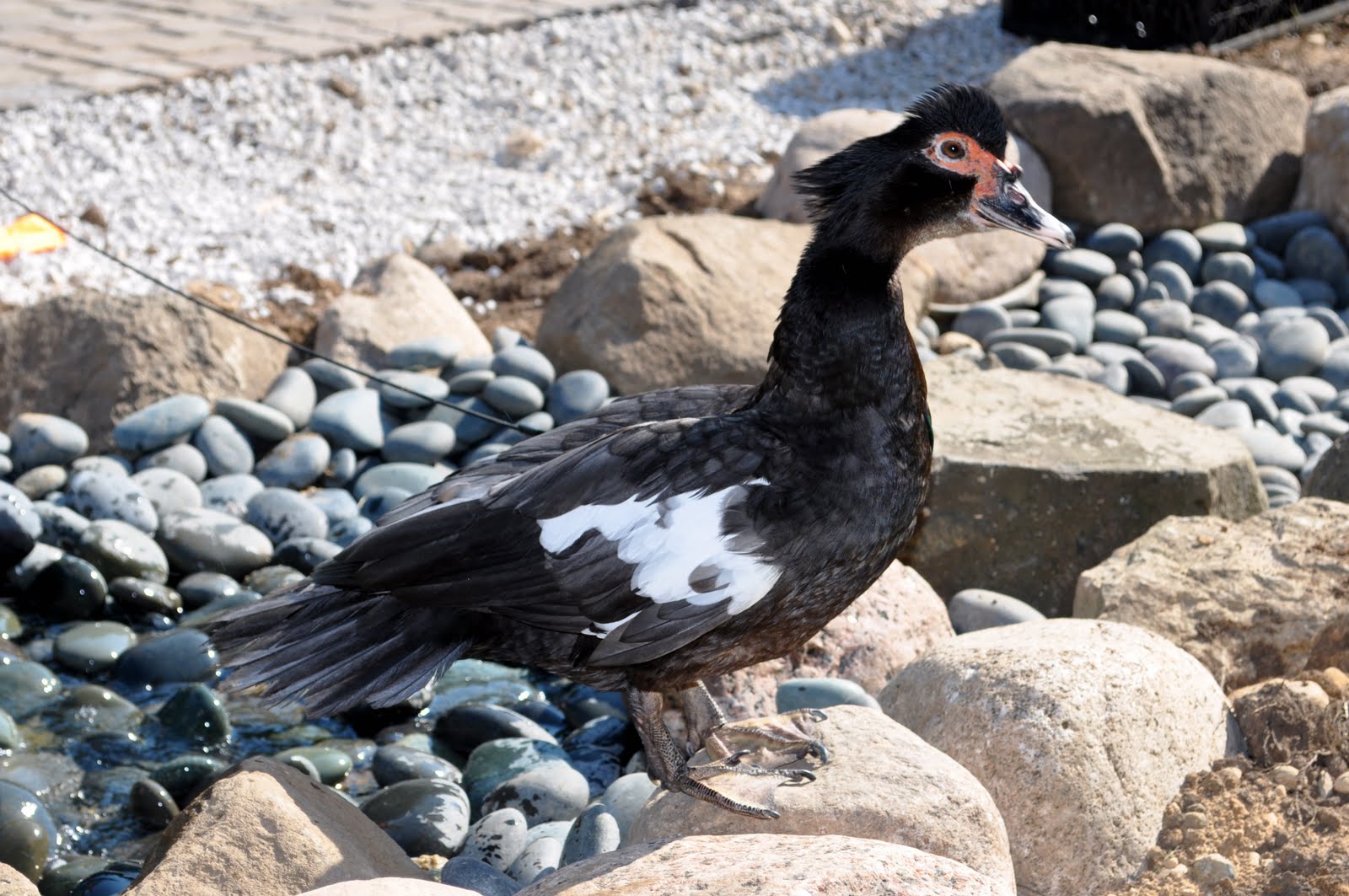
Last week on Thursday, July 7, 2011, we held our official Grand Opening Ceremony for special supporters who made the new building possible.  At the Grand Opening, the board of directors and their families, along with other guests were able to get a walk through tour of the new center.  Two of our Animal Ambassadors were around for the excitement at the Grand Opening. Guests were greeted by Daphne, the Muscovy duck, who was playing in the water feature right outside the front of the new center.

Daphne playing in the water feature and greeting guests.
This exclusive water feature is part of the filtration for a water conservation system enabling the center to reuse water for cleaning and filling ponds.  As guests entered the gathering area, they saw Dakota, the Great Horned Owl with Leslie Kiehl, our education coordinator.  When it was time for the ribbon cutting ceremony, members of the board of directors, UWW’s Marlin Johnson, and County Executive Dan Vrakas shared short speeches on how we have grown over the years.

Guests listening on to the speakers during the ceremony.

  The ribbon was cut with a pair of garden sheers, fitting for our new center.  At the end of the evening, Wildlife Rehabilitators, Cheryl Diehl and Chelsea Matson brought outside a Male Eastern Red Phase Screech Owl to be released.  The release of the owl was great way to symbolize that the center is soaring to great heights of continuing to bring rehabilitation to wildlife. 

Standing in front of the new building ready to cut the ribbon.
We will be hosting public open houses at the new center on Saturday August 27th and Sunday September 11th, 2011 from 1 p.m. – 3 p.m. These will include tours of the new facility led by our volunteers. Additionally, the new center is family friendly, educational, and fun for everyone anytime during office hours.

Guest Blogger: JH

Wednesday, June 29, 2011

Sand Hill Crane Phenomenon!

As many of you know we recently have moved to a new location.  One thing you might not know is that the Wildlife in Need Center has an ongoing tradition with the majestic bird, the sand hill crane.  Our first patient ever was an injured sand hill crane.  And from then our center began to flourish every year with helping wildlife.  It was a happy coincidence that we chose this image as the center piece to our memorable logo.  

On Monday June 27, our new center officially opened, and we were greeted once again with non other than another sand hill crane.  What a coincidence.  This little fellow had his parents scared away by a dog and was thus left alone.  The people who found the crane then were told to make sure to leave the baby out, but sadly the parents never came back.  When brought into the center, it was clear that there were significant injuries to the bird.  Chelsea Matson, one of our Animal Rehabilitators, thought that when she first saw him it was in critical condition, (labored breathing, cold, and skinny) almost dead at that point.  After examining the bird, it appeared to have a spinal injury and was also very dehydrated.    

Our little baby sand hill crane is doing better and eating many worms a day. 

Luckily by the end of the day with some TLC it had appeared to perk up a bit.  By next morning he was standing all on his own!  The baby sand hill crane proved to be a great phenomenon and let’s us believe that our future is bright at our new location.   

For those of you who want to visit the Wildlife In Need Center our office hours are 9am-5pm, seven days a week.  The new Wildlife In Need Center is located at W349 S1480 S. Waterville Rd. Suite B, Oconomowoc, WI. Our new phone number is 262-965-3090.


Guest Blogger  JH    

Wednesday, May 25, 2011

The unexpected consequences of being unemployed

The other day we received a call from a gentleman regarding a nest of baby birds. It’s not an uncommon call this time of year. This nest was different however, because it was inside of the engine compartment of his truck! Squirrels and other small animals will build nests from time to time in a vehicle that gets left out while the owner is on vacation for example, and they can build a nest and move their babies into it from another nest in a matter of hours or days. A bird however, needs time to build it’s nest, lay its eggs, and then incubate those eggs before there’s even a prospect of finding baby birds in a place like this.

So, how long has this truck been sitting that it can’t sit for another week and a half until these baby birds fledge the nest? His response was that being out of work for the past 18 months hasn’t given him very many reasons to drive it! The couple of times he had driven it, he hadn’t realized they were even there! Thankfully, they were tucked safely right above the wheel well and hadn’t made a peep until they were hatched and big enough to realize that they were away from their parents!

Because he now had a reason to drive the truck and didn’t want to be taking the babies away from their parents I advised him to attach the nest onto a mid-sized ladder, place it in a flower basket hanging from a shepherds hook, or another object that would keep it up off the ground. This way the nest would be safe from kids and pets in the neighborhood and if he placed this object directly near the side of the truck that it was originally, the parents shouldn’t have too much trouble finding them to continue their care. Because these birds had their nest in a covered area to begin with he could’ve also placed the nest within a box for protection, either on its side or with a hole cut in it for a doorway.

We raise hundreds of orphaned songbirds each year with the help of our adult and junior volunteers. If you are 12 or 13 with an interested parent or guardian or 14 and up and interested in helping us help them contact us today!
We’re getting lots of calls about baby birds now, especially ones that are on the ground. If you find baby birds that have blown out of the nest the best thing to do is to try to return them to their nest. If that’s not possible then you can easily provide them with a replacement nest. To do this take a small plastic container – if it doesn’t already have holes in it, like a strawberry basket for example, then poke some in the bottom to prevent it from filling up with water. Fill the container with dried grasses, small twigs or other dried natural materials that won’t hold in moisture like green materials would. Then you can tie it, hang it, or attach it to the tree, bush or structure they fell from at a level which you can reach. Six to 8 feet is best, but even 3 or 4 feet will be safer than being on the ground. For more information contact your local rehabilitator or the Wildlife In Need Center at 262-968-5075