Showing posts with label volunteer. Show all posts

Thursday, April 26, 2012

A Tale of Two Opossums


Being a licensed wildlife rehabilitator makes you look at your surroundings in a different way than most people. When my husband and I drive anywhere, one of the things we are always looking for is good patches of dandelion greens to pick for the many cottontails we rehabilitate each year and the other being any injured animals that may need our help. One animal specifically we notice are any dead opossums because anyone of them could be a mom with babies still alive in her pouch. As the only marsupial in North America, mom opossums carry their young with them in their pouch for a number of weeks. They can have two sets of babies each season, one in spring and one in fall. That is why between April and October it is so important to check any dead opossums you see on the road (where it is safe to stop and check).

So the story goes that we are always on the lookout. On September 11th we found a great patch of dandelion greens in Ottawa. The following Tuesday morning my husband went back there for more greens and saw a squashed mamma opossum (he could tell because there were scattered dead little ones on the road). To keep anyone who would be grateful for the free meal from being in the way of traffic, he dragged her way off the road and started picking greens. After just a little while he started thinking; he’d seen her dead and all the little ones but didn't actually check her pouch. So, back he went to where he had dragged her and sure enough - one little guy was still hanging on - ice cold but alive. He brought him home, weighed him and tucked him into a box on heat to warm up.


That night, I had promised to release some orphaned cottontails in a friend’s yard in the town of Waukesha, so after work we packed them up and hurried over there. All went well with the release, but now it was almost 7pm, getting dark, and we need greens again for overnight and morning for the bunnies that were still at home. We wondered where to go - look around and waste time, or go back to Ottawa, which takes time to drive to, but where we’d be assured of abundant greens. We decided Ottawa was the best choice, so off we went. I started picking down the road one way and him the other. A little later he came over and said he thought he heard something but wasn't sure. I came over by where he was picking and listened but heard nothing. Then, a little sound, and nothing again. We didn't want to walk around for fear of stepping on any little ones, and needless to say, by now it was getting dark and we really had to keep picking greens. So I got down to ground level and started making mamma opossum sounds and my husband got down and began to make baby opossum sounds. Sure enough, in just two seconds we hear another little baby. He'd been out there all that time and was cold as ice, but we found him and as of this writing, he and his brother are doing really well.

So, it just goes to show you, if take the extra time you may be able to help save a life.

Guest Blogger: N.M.


Photos courtesy of M. Draeger.

Tuesday, February 21, 2012

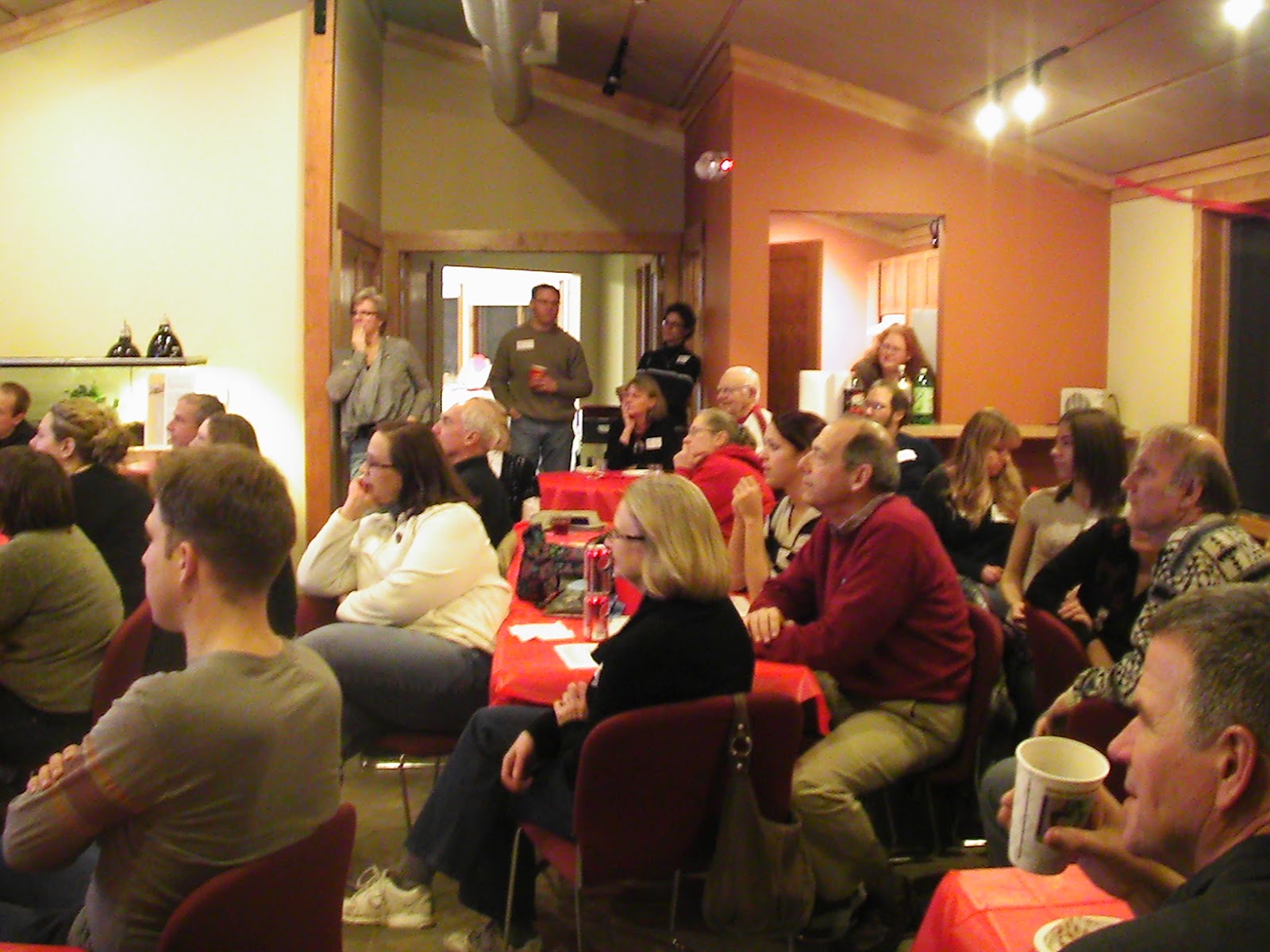
Every January the Wildlife In Need Center holds a celebration to show our appreciation for our amazing volunteers. This party is all about our volunteers and recognizing the hard work they do all year long. This year we were excited to host the party in our own gathering room here at the center!


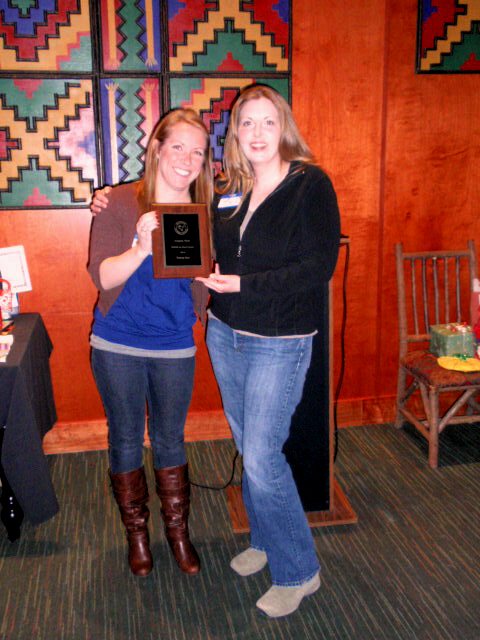
The night is filled with food, drinks and lots of fun. Staff gives a presentation thanking all our wonderful volunteers and also awards the new Volunteer of the Year. This year the award went to Christine Fuller. Christine’s 2011 hours totaled 244.5 hours (average volunteer will clock in about 200 hours per year). Since becoming a volunteer in 2009 she has come to WINC with a wonderful attitude every shift; lifting the spirits of both staff and the resident ambassadors. Staff is lucky enough to encounter her wonderful attitude twice a week. Christine is here at the center every Saturday morning and has stepped up to help on Tuesday afternoons since the beginning of last summer. She gives incredible kindness to our patients and her fellow team members. Her heart has a big warm place for wildlife and it shows! Christine also helps at other WINC events including our dog cookie cutting party to make cookies for the World’s Greatest Cookie Sale.

Christine is dedicated, reliable, and has a great attitude. The center would not be the same without her and we are very grateful to have her as part of the Wildlife In Need Center’s volunteer team.  Thank you, Christine for all that you do. Congratulations on being 2011 Volunteer of the Year!

Interested in volunteering? The center is always looking for more volunteers! We have volunteering opportunities in animal care, grounds and maintenance, office, phones and admissions, baby bird feeding. For more information call the center at (262) 965-3090. We offer volunteer orientations once a month here the center to give you an idea of what we’re really about.
RSVP for a volunteer orientation today!
Tuesday, February 28th from 6:30-8:00PM
Tuesday, March 20th from 6:30-8:00PM
Tuesday, April 17th from 6:30-8:00PM

 
This could be you!

Guest Blogger M.F.

Tuesday, November 15, 2011

An update on Dakota...


We wanted to take the opportunity to once again thank everyone who has been so kind and generous in your support of the center and our beloved Dakota.  Please continue to send your prayers, well wishes, and positive energy our way. The outpouring of local & state community support from our friends, our volunteers, the public who has been touched by Dakota, and the wildlife rehabilitation community at large, has been overwhelming---and appreciated more than we can say. Thank you all for keeping Dakota in your hearts.....Dakota is our heart and soul.  He is such an important member of our family.  Our greatest wish is to have him home and safe.

The most up-to-date information we have is detailed in the latest JSOnline article: http://www.jsonline.com/news/waukesha/searchers-looking-near-dousman-for-stolen-owl-ef32mna-133914393.html  We have had a number of people contacting the center with offers to search & questions about sightings in various spots in southeastern WI. Dakota is believed to be in the local area. If you live in the Dousman area, please continue to keep your eyes open for a great horned owl wearing jesses (leather straps like leashes, 4-6 inches long, on his ankles), or acting strangely. Dakota is fully imprinted on people, and our hope is that he would therefore be more likely to appear "tame", and more readily visible than an owl who is fully wild (and therefore more instinctively shy of people). 

We are thankful and so grateful for the many offers to help search.  At this time, we are limiting searchers to our staff and trained wildlife volunteers that help at the Wildlife In Need Center. We are searching on private property with permission and do not want to lose that permission by being too much of a bother. This must be terribly traumatic to Dakota, to be attacked by strangers the way he was, and to be loose and alone in an unfamiliar area.  We feel people he is familiar with will have the best chance of recovering him.  Additionally, because he is a Great Horned Owl, he could possibly hurt someone from fear if someone unfamiliar with raptors tried to handle him. We are so very thankful to everyone who has contacted us offering to help. There are more good people in this world than bad and that’s inspiration for all of us.

Please continue to contact the facility at 262-965-3090 with any sightings in the local Dousman area. Please also continue to contact the Waukesha County Sheriff's Department at 262-548-7126, if you have any information regarding the theft of Dakota.

Thank you all so very much for caring about wildlife, and about bringing our Dakota home. People have contacted us from all over Wisconsin, and are reporting seeing or hearing owls they think are Dakota. Many say they have never seen or heard owls in their area before.  Dakota and the Wildlife In Need Center are still educating people about owls and other wildlife, and we will never stop.  We would also like to offer our most sincere thanks to the Waukesha County Sheriffs Department for their quick action and for treating this crime as seriously as they have.  The Wisconsin Department of Natural Resources has also been most helpful to us, and is looking into the case as well.


(Guest Bloggers LR & KP.)

Thursday, October 27, 2011

A Tale Of Two Opossums


Being a licensed wildlife rehabilitator makes you look at your surroundings in a different way than most people. When my husband and I drive anywhere, one of the things we are always looking for is good patches of dandelion greens to pick for the many cottontails we rehabilitate each year and the other being any injured animals that may need our help. One animal specifically we notice are any dead opossums because anyone of them could be a mom with babies still alive in her pouch. As the only marsupial in North America, mom opossums carry their young with them in their pouch for a number of weeks. They can have two sets of babies each season, one in spring and one in fall. That is why between April and October it is so important to check any dead opossums you see on the road (where it is safe to stop and check).

So the story goes that we are always on the lookout. On September 11th we found a great patch of dandelion greens in Ottawa. The following Tuesday morning my husband went back there for more greens and saw a squashed mamma opossum (he could tell because there were scattered dead little ones on the road). To keep anyone who would be grateful for the free meal from being in the way of traffic, he dragged her way off the road and started picking greens. After just a little while he started thinking; he’d seen her dead and all the little ones but didn't actually check her pouch. So, back he went to where he had dragged her and sure enough - one little guy was still hanging on - ice cold but alive. He brought him home, weighed him and tucked him into a box on heat to warm up.


That night, I had promised to release some orphaned cottontails in a friend’s yard in the town of Waukesha, so after work we packed them up and hurried over there. All went well with the release, but now it was almost 7pm, getting dark, and we need greens again for overnight and morning for the bunnies that were still at home. We wondered where to go - look around and waste time, or go back to Ottawa, which takes time to drive to, but where we’d be assured of abundant greens. We decided Ottawa was the best choice, so off we went. I started picking down the road one way and him the other. A little later he came over and said he thought he heard something but wasn't sure. I came over by where he was picking and listened but heard nothing. Then, a little sound, and nothing again. We didn't want to walk around for fear of stepping on any little ones, and needless to say, by now it was getting dark and we really had to keep picking greens. So I got down to ground level and started making mamma opossum sounds and my husband got down and began to make baby opossum sounds. Sure enough, in just two seconds we hear another little baby. He'd been out there all that time and was cold as ice, but we found him and as of this writing, he and his brother are doing really well.

So, it just goes to show you, if take the extra time you may be able to help save a life.


Guest Blogger N.M.

Wednesday, August 3, 2011

Miracles Happen Everyday

Well actually a "Miracle" (having the Wildlife In Need Center and our children's environmental education project funded) did not happen today. However, each day a wild animal makes it through our doors, or is set free after rehabilitation, a new volunteer gains experience and insight they couldn't get anywhere else, or a child's world is changed forever by meeting our educational ambassador, Dakota, the Great Horned Owl - we consider that a miracle.

While I do wish I were writing to tell you all that we had just been chosen as one of Potawatomi Bingo Casino’s Miracle Charities for 2011, and the amazing things we’d hoped to do with the opportunity, that's not the case for this year. We do however, have a number of interesting and exciting projects in the works that I wanted to tell you about.

You should already know about our various volunteer programs, outreach programs, and of course our focus on continuing to provide the best rehabilitation to our wild neighbors possible. I thought you might be interested in a few other projects that we’re working on which you may not have heard about until now.

Did you know that an important segment of WINC’s mission from the beginning has been to provide education to the public for the benefit of our wild neighbors? In addition to providing answers via phone, website, and other means (like our blog!), for nearly a decade we’ve offered environmental education programs featuring our ambassador animals on an outreach basis through as many as 120 outreach programs a year! Now that supporters like you have helped us reach new heights with the completion of our new facility we hope your generosity will continue to help us soar even higher with these unique education-focused projects.
  1. One project WINC is collaborating on is focused on connecting children and wildlife through learning. This project involves long-time supporter, Rebecca Seymour, and children’s author and President of The Little Environmentalists, Rebecca Mattano, as well as staff and volunteers of WINC. Our team is creating a book featuring the educational animal ambassadors that can be used in conjunction with as well as independently of the general educational programming we’re already providing.
When used during one of our programs, children of all ages, from tots to seniors, will have the chance to revisit the experience that they had meeting Dakota, Waldo, and even Daphne, in this book that will remain with their classroom or activity coordinator. Those who, for whatever reason, don’t have the option of a live program could request several copies of this book through which any educator could offer a unique experience on its own to their students.

These books would also be available to anyone visiting the new WINC facility, whether simply to browse through or to purchase to take home and use to educate their own friends and family. The total budget for this project is $10,000. Donated time from both Rebecca Seymour and Rebecca Mattano, funds from sales at The Little Environmentalists, as well as a $1,000 grant already received from the Greater Oconomowoc Area Foundation have helped to bring the amount we still need before going to print to $6,500. Once the books are printed, funds from any sold here in our office will be saved to pay for future printings.

Are you interested in finding our more about this program? Are you a professional designer or editor interested in joining our team, or do you work for a publishing company that might be interested in helping us make this dream project a true reality? Perhaps you’re just interested in making a small contribution to help us get to our goal? If so, please contact us today!

Stay tuned to future posts for more unique projects you may not know about going on at WINC that you can get involved with!

Wednesday, May 25, 2011

The unexpected consequences of being unemployed

The other day we received a call from a gentleman regarding a nest of baby birds. It’s not an uncommon call this time of year. This nest was different however, because it was inside of the engine compartment of his truck! Squirrels and other small animals will build nests from time to time in a vehicle that gets left out while the owner is on vacation for example, and they can build a nest and move their babies into it from another nest in a matter of hours or days. A bird however, needs time to build it’s nest, lay its eggs, and then incubate those eggs before there’s even a prospect of finding baby birds in a place like this.

So, how long has this truck been sitting that it can’t sit for another week and a half until these baby birds fledge the nest? His response was that being out of work for the past 18 months hasn’t given him very many reasons to drive it! The couple of times he had driven it, he hadn’t realized they were even there! Thankfully, they were tucked safely right above the wheel well and hadn’t made a peep until they were hatched and big enough to realize that they were away from their parents!

Because he now had a reason to drive the truck and didn’t want to be taking the babies away from their parents I advised him to attach the nest onto a mid-sized ladder, place it in a flower basket hanging from a shepherds hook, or another object that would keep it up off the ground. This way the nest would be safe from kids and pets in the neighborhood and if he placed this object directly near the side of the truck that it was originally, the parents shouldn’t have too much trouble finding them to continue their care. Because these birds had their nest in a covered area to begin with he could’ve also placed the nest within a box for protection, either on its side or with a hole cut in it for a doorway.

We raise hundreds of orphaned songbirds each year with the help of our adult and junior volunteers. If you are 12 or 13 with an interested parent or guardian or 14 and up and interested in helping us help them contact us today!
We’re getting lots of calls about baby birds now, especially ones that are on the ground. If you find baby birds that have blown out of the nest the best thing to do is to try to return them to their nest. If that’s not possible then you can easily provide them with a replacement nest. To do this take a small plastic container – if it doesn’t already have holes in it, like a strawberry basket for example, then poke some in the bottom to prevent it from filling up with water. Fill the container with dried grasses, small twigs or other dried natural materials that won’t hold in moisture like green materials would. Then you can tie it, hang it, or attach it to the tree, bush or structure they fell from at a level which you can reach. Six to 8 feet is best, but even 3 or 4 feet will be safer than being on the ground. For more information contact your local rehabilitator or the Wildlife In Need Center at 262-968-5075

Friday, February 18, 2011

We Couldn't Do What We Do...

...without our volunteers. They give of their time and often their money and other resources as well because they care. We care too and one of the ways we show this is through an annual party thrown exclusively for those who help us day in and day out. Each year we give out awards to volunteers who have given us the desire to recognize their outstanding dedication. Here are the descriptions of this years honorees:

Our "Volunteers of the Year"

 
This person’s 2010 hours totaled 298.5 hours (average volunteer will clock in about 200 hours per year.)
Words to describe this person: Dedicated, Caring, Hard-worker.
Besides coming every Sunday afternoon she stays to also volunteer the Sunday evening shift…this includes every week in the summer! She is reliable and has only missed one week all year! That’s dedication.
If she does not come baring gifts from HAWS in the summer that she has so kindly stopped to pick up, she comes baring wonderfully homemade treats to share with everyone! She also is the creative mind behind many of Daphne’s handmade costumes.
Every Sunday she starts her shift by asking what is going on and what can she do to help before she has to begin charts. It never fails, and I love that about her. She is willing to do anything; even if it is a job that belongs on Dirty Jobs with Mike Rowe! She has spent Sunday afternoons adding wind-block branches to the aviaries in the dead of winter, been elbow deep in duck poop, help re-set animal cages for new patients and has done it all with a smile on her face!
She shows patience with every animal’s chart she does and always makes sure the animals are as comfortable and stress-free as possible.
She goes the extra mile; as I mentioned before she often stops at HAWS or Elmbrook Humane Society on her way to the center in the summer. She has gone to the extra classes offered by animal care staff to help better herself and her wildlife skills. She helps out greatly for the World’s Greatest Cookie Sale; baking dog cookies and baking dozens and dozens of her own delicious recipes for the sale. She has also been known to bring tasty treats to the Pancake Breakfast and has been behind the scenes volunteering at our annual banquet.
She is also one of our Home Care Volunteers who has cared for many self-feeding Cottontails through the years. I know if they could, the patients and residents she has cared for since starting at the center in 2006 would say, Thank you.


She is dedicated, caring, and a very hard worker. The center would not be the same without her and we are so grateful to have her as part of the Wildlife In Need Center’s team. Thank you for all that you do!
She has been an animal care volunteer at WINC since 2006. Her regular animal care shift is every Saturday morning, and in 2010 she volunteered 211 hours.
Besides her weekly animal care shift, she is our “Go To” person whenever we are in need of extra volunteer help. Because she lives near WINC, she can be here in minutes when we call to ask for her help. She rarely misses her regular shift or says no to our pleas for extra help.
She will never hesitate to ask us how she can help. If we have extra jobs that need to be done after animal care is complete, she is there to jump right in to do whatever needs doing. No job is too tedious, difficult, dirty, smelly or uncomfortable. She will work at a job outside in frigid winter weather or in our hot, humid, buggy summers. She even came in several days when we needed extra eyes to help find our Red-tailed Hawk, Raenah.
Especially handy is the fact that due to her experience and animal-handling skills, she is able to handle a raptor while I do a treatment on it, or she’ll clean its cage while I hold the bird. But she will also feed baby birds, feed and clean up after messy little ducklings, care for Daphne, and any other animals that need care.
She has never hesitated to pitch-in or complained about the amount of cleaning necessary on every shift. She washes dishes and does laundry and still has a smile on her face. The Staff and the other volunteers enjoy working with her because of her hard work and good sense of humor.
Thank you so much, we love you!

Our "Rising Star" volunteer of the year


This person has worked on just about every shift possible except for maybe on Saturdays.
This person started as a volunteer in September and had racked up 135 hours in 12 weeks for the year of 2010 (an average volunteer would only work about 50 hours in that time.)
Although she is new to the Wildlife In Need Center she is already a strong rising star! When we lost our two Monday afternoon volunteers in the same week due to a back injury and a foot injury, she stepped in and took on the Monday afternoon shift along with her Tuesday afternoon shift! She took over for them at the end of November last year and has continued to cover until they were ready to come back this coming week. I do not want to leave out that she is driving from Whitewater to get here every week!
Since she started she has shown great enthusiasm for the center. Willing to do whatever we may ask of her. She has always been one who has asked questions when she was unsure of anything and as staff we love when someone is not afraid to ask questions. She goes the extra mile on her shift to make sure staff is doing ok and making sure we do not need any extra help. I never have to ask her to take out the garbage or sweep and mop. She usually already has those things done before I even think to ask!
On top of taking on extra volunteer hours she even volunteered her beautiful property to some of our orphaned Gray Squirrels this fall.
It has been our pleasure as animal care staff getting to know her and the kind soul that she is. She just brightens our afternoons with her smile! We look forward to continuing to work with her as she begins to learn more advanced animal care at the center.
We appreciate that she has the personality that shows that she wants to be at the center. As animal care staff wildlife rehabilitation is a big part of our lives and we love sharing that with other enthusiastic volunteers. That is why she is 2010’s Rising Star!
We are so grateful to have her as part of the Wildlife In Need Center’s team. Thank you for all that you do!

We are very grateful for the volunteers all year long and can't wait to share the excitement of our new facility with them all. If you are interested in becoming a volutneer visit our website at http://www.helpingwildlife.org/getinvolved/volunteer.htm

Thursday, October 7, 2010

Rescue Mishaps: Not what you'd expect

I’ve done many rescues for the Wildlife In Need Center over the years and most go well, a few crazily wrong, but some turn out altogether not to be quite what they seem. Now that we’re coming to the end of the busy season I thought I would relate some of these adventures.

Decoys gone wild

Driving down Highway 18 east of Wales, on the way to Brandybrook Community Center for a fall volunteer meeting a few years ago, my eye was caught by a white owl sitting on a fence post in a field. Unless it was a rare albino, the only owl we ever see in Wisconsin that is white is a Snowy Owl. We do not normally have Snowy Owl in Wisconsin as they live in the Arctic. But sometimes in winter when there is a cyclical crash in their lemming food populations, Snowy Owls will come further south looking for food. I wanted a closer look to see what that owl was. I turned around, drove back and stopped my car before I got the owl. The owl’s back was facing me and across the ditch and field I could see barbed wire twined around the post and the owls feet appeared to be tangled in the wire. I quietly got out of my car (owls can hear a mouse the distance of a football field so I’m sure it wasn’t quiet to the owl), put on my leather handling gloves and grabbed a towel. I knew I would have to subdue the owl quickly because I did not want it to thrash its feet and shred them on the barbed wire. I crept up behind the owl and was almost ready to throw my towel over it when I stopped. The owl was a plastic Great Horned Owl decoy that was so weathered the paint had worn off leaving the white plastic showing through. The barbed wire was holding it to the post. Obviously it had been there for years and I had driven past many times never noticing it. Some wildlife professional I was to mistake a decoy for a real owl! When I arrived at Brandybrook I related my story to explain my lateness. When I told people that I had stopped for a white owl on a fence post, several said “It’s a decoy!” Apparently I was not the only one fooled by a decoy.

Flightless in the rain

A call came to WINC during a driving rainstorm. Someone had called someone else to report seeing a hawk hit by a car south of Waukesha on Highway 59 between Highway 164 and Highway XX. Because I didn’t talk to the witness I didn’t have an exact location. But I did have extra coverage in the office so off I went to see if I could find the hawk. I drove east on 59 looking on both sides of the road for a hawk in the rain. Then I saw a crumpled mottled gray form laying against the fast lane curb on west-bound 59. I drove to the next intersection, turned around and drove back. I parked on the shoulder, grabbed my gloves and towel, and waited in the pouring rain to dash across two lanes of traffic to grab – a dirty gray t-shirt, filthy from being run over, probably thrown by momentum of a vehicle against the curb in a vaguely hawk-like shape. I did rescue it so no one else would mistake it for an animal. I didn’t know if that is what the person saw or if they had actually seen a real animal hit, so I drove back and forth that section of road four times before heading back to WINC to dry out. Hopefully our hawk friend wasn’t injured and flew off to find someplace dry as well.

Volunteers at last year's basic rescue training class.


During last year's basic rescue training class volunteers wrangle our educational muscovy duck for practice.

-Guest Blogger LR

Wednesday, September 8, 2010

What Can Children Do to Help?


We often get this question from parents whose children are budding veterinarians, environmentalists and Dr. Doolittles. One way that children can help directly is by participating in our Baby Bird Feeding Junior Volunteer program. This program requires that children be at least 14 years of age or 12 and 13 with a parent or guardian. The wonderful thing is that many children want to start helping at much younger ages that this! While they can’t volunteer to do animal care at the Center, they can help the wildlife in other ways. We are currently in the process of designing a hub on our helpingwildlife.org site made just to recognize these enterprising young individuals. We hope that their caring and outlook on the world will inspire others to join us in helping our wild neighbors. If you have any suggestions for what would be helpful to include in this section please let us know. Whether it’s an idea we include right away or one we add down the road, we’d like to hear it!
So what if you are a kid who cares and want some suggestions on how to help now; or perhaps you already participated in helping us raise so many baby birds over the summer but you’d still like to help out this fall; what if you are looking for ways to help right now?

Here are some ideas:
  • Pick greens. Dandelions, clovers, plantain, and wide-blade grasses are important foods for cottontails and woodchucks. Just pick them into a plastic shopping bag and tie shut. Refrigerate until you can them to the Center. We can’t get enough dandelion greens for our hundreds of juvenile cottontails. It is their favorite food and helps cure diarrhea.

  • Gather native seeds, nuts or berries the next time you go with your family on a hike. These are foods many of our patients are used to, making them feel safer and eat better. Be sure you identify the plant you are picking from before doing so, to avoid anything that may be poisonous! Stay off of private property as well. And most importantly, please remember to leave some for the wild neighbors who live in those areas as well!

  • Grow food materials, even though it’s getting chilly you could still plant some greens or plan to plant sunflowers, greens or veggies next spring for our wild patients.

  • The next time it rains, head out of doors and gather up some of the night crawlers and earthworms from the sidewalk. Birds of all kinds love to eat them including our patients! If you prefer not to gather living animals, put them back in the yard. They will help the soil and the local birds may catch them on their own later.

  • If your family trims any trees such as elm, oak, willow and apple or thin raspberry and blackberry thickets, ask them if you can gather the branches. Squirrels and cottontails eat the leaves and bark and the branches are good for chewing exercise.

Be sure to check our website whenever you need information about your wild neighbors or the Wildlife In Need Center. And, although we may not be able to incorporate them all, if you have suggestions on how to make our site better we will always listen. Finally, for those “big kid” volunteers, be sure to check out our volunteer pages. They are still under construction, but I’m sure you’ll find more helpful information than you remember!

Wednesday, August 18, 2010

Through an Intern’s Eyes

Working at the Wildlife in Need Center (WINC) as a marketing intern for the past three months has been a great ride, whether it was preparing for a fundraiser, navigating my way through a donor database, or admitting cute little orphaned or injured critters into the center. Working with dedicated WINC employees, learning the tricks of the trade in marketing within a nonprofit organization, and giving snacks to Waldo the Woodchuck in between my daily tasks has made this internship an informative and memorable experience.


I came into this internship having a love for but little knowledge of Wisconsin wildlife. Having grown up in a rural area, I came to know and have a soft spot for the little animals that found their way into my front yard and my mom’s vegetable garden, even though their crimes were not always warmly welcomed! However, I now feel that I have gained more insight into how I can live in harmony with wildlife. Reading the book Wild Neighbors by the Humane Society of the United States and learning from my supervisors at WINC have taught me how I can prevent wildlife from becoming nuisances around my home. Admitting patients in WINC’s front office allowed me opportunities to hold and identify wildlife.

But as many of you know, school is just around the bend. My free time to bird-watch and observe fascinating Wisconsin wildlife will be extremely limited. The months will get busier, and my head will increasingly feel heavier with school assignments and other activities. I am going to make the assumption that many of you will also have busier schedules upon the arrival of fall. Who has the time or means to donate to wildlife when there is no room on our calendars and never-ending bills to pay?

However, for those of us who wish to remember the animals in the midst of our busy schedules, we can still pitch in and help! For example...

  1. Whether it is shopping at the grocery store, filling up gas in our cars, or renewing our magazine subscriptions, there are many ways in which we can provide for wildlife during our everyday routines. Please visit WINC’s website at www.helpingwildlife.org/newsevents/fundraisers.htm to read more about these easy and worthwhile opportunities.
  2. We can donate our extra veggies, pet foods, and/or other products that could benefit injured wildlife. View WINC’s wish list online at www.helpingwildlife.org/getinvolved/wishlist.htm.
  3. We should take precautions around our homes to ensure the safety of our families and nearby wildlife. We can find out what we can do to prevent any wildlife-related disasters from occurring by visiting the helpful links at www.helpingwildlife.org/wldlemergency/hoursloc.htm.
  4. If we do see animals that appear to be injured or in trouble, making a simple phone call to WINC or visiting its website to learn about the proper steps we should take could save lives!
  5. WINC is always in need of volunteers and interns throughout the year! Whether it is caring for the animals in person, working in the front office and reaching out the community, or educating the public on our wild neighbors, WINC always needs our help! View these awesome volunteer and internship opportunities at www.helpingwildlife.org/getinvolved/volunteer.htm.

I will miss my summer days with Waldo the Woodchuck, Daphne the Duck, and all of the other educational animals and patients at the Wildlife in Need Center. However, even though I will not be able to see them every day, I will always remember them and try my best to remain a part of WINC, whether it is contributing donations that fit inside my budget or volunteering my time at the center next summer. Where there is a will, there is a way!

I was only an intern at WINC this past summer, but in the end, I couldn’t help but feel like I became a part of a…family. And shouldn’t family members always support each other?


...Daphne the Duck says, "YES!"


Guest Blogger J.M.


NOTE: Do you have any suggestions for WINC’s upcoming blog posts? If so, please post them in your comment, and WINC may use them in the near future!

Wednesday, July 21, 2010

Do you know what to do when...

  • you find a cottontail nest in your yard?
  • your cat brings you an injured bird?
  • you see an owl get hit by a passing car?
  • you find a small raccoon near the side of the road?
These are some of the more common situations our wild neighbors find themselves in every day and they need your help! By preventing the situations that may lead to an animal becoming one of our patients, we save just as many lives over the phone as we do in our clinic.

Did you know that the Wildlife In Need Center has recently received a generous grant to fund and enhance our unique internship programs? The generous donation given by the James E. Dutton Foundation has allowed the Center to make more positions available in animal care this summer. Those of you who’ve been around WINC throughout the years know how important animal care interns are during our busy summer months. Their help allows us to increase the quality of care we can provide our patients. The funding will also allow us to offer animal care positions during our off-season as well which will help launch a whole new aspect of research and allow for the best care of all of our future patients.

As our Center grows and our need to educate the communities we serve grows with it, we also plan to expand our internship programs accordingly. Our new partnership with UW-Waukesha means that we are not only enhancing the experiences and learning opportunities provided for the valuable team members to our animal care staff and volunteers, we are also adding new team member positions including marketing and community outreach as well as an education intern.

Most importantly, we are looking for someone to help us launch our environmental education internship program. If you or someone you know is interested in:
  • Learning how to assist the public with wildlife questions
  • Designing educational brochures for children’s programs
  • Creating educational displays for the new educational wing
  • Helping to present educational programs to the public
  • Create and publish educational videos
  • and more...

Learning to live peacefully with wildlife as well as knowing when a wild animal may need our help are just some of the lessons you could share if you were an education intern at the Wildlife In Need Center. Interns should have experience with various computer programs, working with people and reliable transportation. For a complete description of the qualifications for becoming an intern visit our website. If you want to help inspire people both young and old about the wonderful world around us then we want to hear from you!

To apply send a cover letter describing your interest and previous experience as well as a current resume to sacummings@helpingwildlife.org

For more information about what it’s like to be a WINC intern read this weeks Lake Country Reporter or visit our website. And thank you for caring about the animals.