Showing posts with label wildlife. Show all posts

Thursday, September 1, 2011

Top 10 Reasons why you should attend the WAUK with WINC event on Saturday, September 24th

10. If you register in advance you’ll get a high-quality, long sleeved event shirt!


9. It is a healthy way to spend time with the kids (even if they’re not your own)!

8. It is a great way to fight those beginning of the school year doldrums!

7. It is a good excuse to get some exercise!

6. You can have someone take your picture by the Anagama Wood Kiln!

5. It will be the perfect time of year to enjoy the fall scenery on the Glacial Drumlin Trail!

4. It is an opportunity to visit the NEW Wildlife In Need Center!

3. It is a good opportunity to hike and learn about the Field Station!

2. It is a fun way to support 2 great causes!

1. It will be a hiking HOOTING good time!

Find out more and register online here
 
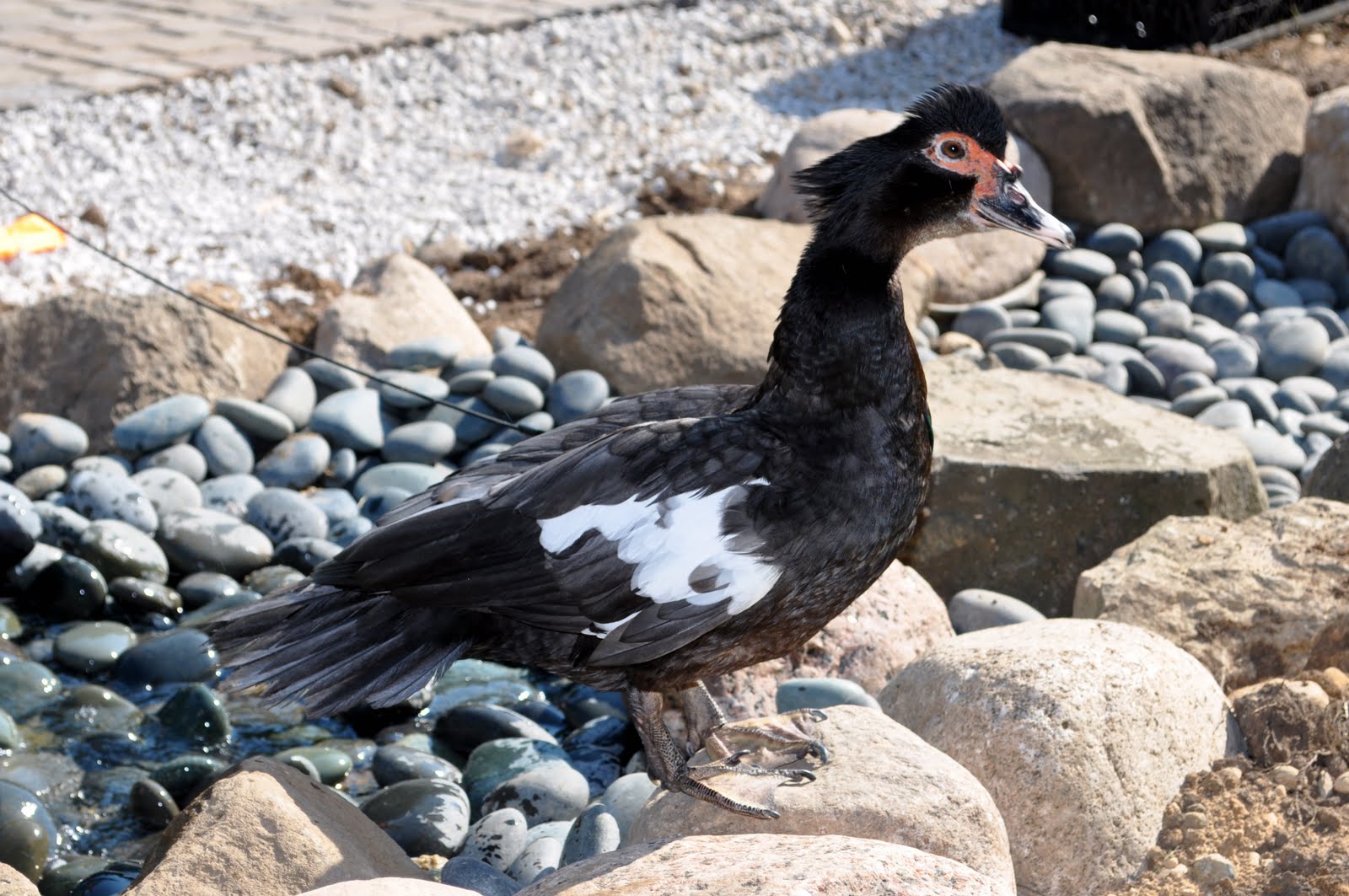
Tell us why you'll be attending this fun walk/run event and you could be one of the lucky people chosen to have their picture taken with Wildlife In Need Center animal ambassador, Daphne the duck!

Thursday, July 14, 2011

Grand Opening Ceremony!

Last week on Thursday, July 7, 2011, we held our official Grand Opening Ceremony for special supporters who made the new building possible.  At the Grand Opening, the board of directors and their families, along with other guests were able to get a walk through tour of the new center.  Two of our Animal Ambassadors were around for the excitement at the Grand Opening. Guests were greeted by Daphne, the Muscovy duck, who was playing in the water feature right outside the front of the new center.

Daphne playing in the water feature and greeting guests.
This exclusive water feature is part of the filtration for a water conservation system enabling the center to reuse water for cleaning and filling ponds.  As guests entered the gathering area, they saw Dakota, the Great Horned Owl with Leslie Kiehl, our education coordinator.  When it was time for the ribbon cutting ceremony, members of the board of directors, UWW’s Marlin Johnson, and County Executive Dan Vrakas shared short speeches on how we have grown over the years.

Guests listening on to the speakers during the ceremony.

  The ribbon was cut with a pair of garden sheers, fitting for our new center.  At the end of the evening, Wildlife Rehabilitators, Cheryl Diehl and Chelsea Matson brought outside a Male Eastern Red Phase Screech Owl to be released.  The release of the owl was great way to symbolize that the center is soaring to great heights of continuing to bring rehabilitation to wildlife. 

Standing in front of the new building ready to cut the ribbon.
We will be hosting public open houses at the new center on Saturday August 27th and Sunday September 11th, 2011 from 1 p.m. – 3 p.m. These will include tours of the new facility led by our volunteers. Additionally, the new center is family friendly, educational, and fun for everyone anytime during office hours.

Guest Blogger: JH

Wednesday, June 29, 2011

Sand Hill Crane Phenomenon!

As many of you know we recently have moved to a new location.  One thing you might not know is that the Wildlife in Need Center has an ongoing tradition with the majestic bird, the sand hill crane.  Our first patient ever was an injured sand hill crane.  And from then our center began to flourish every year with helping wildlife.  It was a happy coincidence that we chose this image as the center piece to our memorable logo.  

On Monday June 27, our new center officially opened, and we were greeted once again with non other than another sand hill crane.  What a coincidence.  This little fellow had his parents scared away by a dog and was thus left alone.  The people who found the crane then were told to make sure to leave the baby out, but sadly the parents never came back.  When brought into the center, it was clear that there were significant injuries to the bird.  Chelsea Matson, one of our Animal Rehabilitators, thought that when she first saw him it was in critical condition, (labored breathing, cold, and skinny) almost dead at that point.  After examining the bird, it appeared to have a spinal injury and was also very dehydrated.    

Our little baby sand hill crane is doing better and eating many worms a day. 

Luckily by the end of the day with some TLC it had appeared to perk up a bit.  By next morning he was standing all on his own!  The baby sand hill crane proved to be a great phenomenon and let’s us believe that our future is bright at our new location.   

For those of you who want to visit the Wildlife In Need Center our office hours are 9am-5pm, seven days a week.  The new Wildlife In Need Center is located at W349 S1480 S. Waterville Rd. Suite B, Oconomowoc, WI. Our new phone number is 262-965-3090.


Guest Blogger  JH    

Wednesday, February 17, 2010

A Tail of Two Star Crossed Lovers


O Romeo, Romeo! Wherefore art thou Romeo?

The quote above may easily have been the call of a female Barred Owl, stuck inside a chimney in the Village of Menomonee Falls. On the eve of Saturday, February 13th, the homeowners heard a rustling inside the vent of their fireplace, similar to that of a trapped animal. The noise continued the following day, causing the concerned homeowner to call upon a local wildlife rehabilitator for assistance. It was early Monday morning when the rehabilitators arrived to inspect the fireplace and if needed remove whatever may be causing the commotion inside the chimney. To everyone’s surprise it was not a raccoon, squirrel or wayward bird, but a female Barred Owl! Given the time of year (see owl facts below), it’s possible that while looking for a nest site she found her way to the uncapped chimney. While inspecting the chimney, she may have fallen in and was subsequently not able to fly out. Thankfully, after being trapped for more than 2 days, the rescue was complete and an exhausted and dehydrated Barred Owl was brought to the Wildlife in Need Center. A short time later though, much to everyone’s surprise, the rescuers called to inform us that a second owl, (possibly the mate?) was also trapped in the chimney. Had he entered the area looking for his lost partner? Or had he been trapped higher in the chimney out of sight? Interestingly, Sunday, February 14th was Valentine’s Day and it was that day that most of the sounds had come from the chimney. Could the chimney have been the location of a lovers tryst?

It was later in the day that the male Barred Owl arrived, only slightly dehydrated and in better shape than his female counterpart. Currently both owls are being treated for dehydration and will hopefully be in care for only a short time. They have no idea the delight it brings us all each time they call to each other from their separate enclosures. Meanwhile, the homeowner of the chimney has quickly responded to the situation and is having all of their chimneys capped as this story is written.
Is love a tender thing? It is too rough, Too rude, too boisterous, and it pricks like thorn.

Romeo, Act I, scene iv

The Barred Owl is a medium-sized gray-brown owl streaked with white horizontal barring on the chest and vertical barring on the belly, hence the name. Often confused by name with the Barn Owl, Barred Owls have a round-headed with a whitish/brown facial disk and dark brown trim. Their eyes are dark brown, and the beak is yellow and almost covered by feathers. There is no difference in plumage between the male and female. Primarily a nocturnal owl, you’ll find them roosting high in the trees, camouflaged next to a trunk, or nesting in an open cavity. Their calls are very distinct "Hoo, hoo, too-HOO; hoo, hoo, too-HOO, ooo" which can often sound like "Who, cooks, for-you? Who, cooks, for-you, all?" Barred owls will eat a variety of foods, but meadow voles are its main prey. Squirrels and young rabbits make up a part of their diet, including an occasional roosting bird. Barred Owls also eat animals you would find near a pond or marsh, like frogs, snakes, crickets, and grasshoppers. The courtship for these owls begins in February, with breeding occurring between March and August. Barred Owls mate for life. How long do they live? They can live up to 23 years in captivity and 10 years in the wild. Great Horned Owls are their only natural enemy.
-KF (aka CBL)

Monday, December 21, 2009

Help us help wildlife


Did you know that the Wildlife In Need Center publishes an amazing calendar each year to promote the work its doing to help our wild Wisconsin neighbors?

I know that the primary goal of this blog is about helping wildlife and educating you about how you can help wildlife too. That is why I want to let you know that by purchasing a calendar for yourself or possibly for a loved one, YOU are helping to spread the word about how to help our wild neighbors too! This is our 15th year of providing care and we have chosen to feature some of the amazing stories we’ve seen in recent years. From the barred owl whose ground-breaking surgery, therapy, rehabilitation and release would have cost over $15,000 if were not for the generous donations of time and materials from our volunteer veterinarians, local specialists and volunteers to the tiniest physical therapy patient we’ve ever had in an infant 13-line ground squirrel. You can use your credit card and have your order shipped to you by calling someone in our office (262-968-5075) 7 days a week (except for Thanksgiving, Christmas and New Years days) or you can stop by anytime to see it for yourself. 2010 calendars are only $15 each and even if the high quality paper, binding and printing don't sell you, the amazing photos and stories will. Thank you for caring and we wish you and yours all the best in the coming year!

Wednesday, December 16, 2009

Do you know anything about elephants?

“Do you know anything about elephants? No, I don’t want you to think that I have seen an elephant in my yard, but I’ve called you guys on so many other things and you seem to be very knowledgeable.”

The caller went on to describe the situation which she needed clarified and ultimately said that since she wasn’t currently in a position to look the information up herself, she knew exactly who to call.


Her question was regarding a conversation she had with a friend claiming that a baby elephant weighed in at an extremely high amount and was walking after only a few days. Although I don’t know a lot about elephants I could relate to her that a number of large mammals are able to stand and walk very shortly after birth like deer, horses and cattle and that an elephant would likely fall into that same category of animals. In nature, every species fills its own niche and every animal is an individual, but they also have a lot in common –both with each other and with ourselves- if you take the time to think about them. We don’t often get calls out of our realm like these, but we are always happy to help when it comes to people who care about our fellow creatures as we do.

Wednesday, November 11, 2009

Foxes Away!

The caller had a fox that had been “hanging around” his yard and wanted to know what could be done about it. What was really going on was that a fox had been passing through his yard several times a week throughout the past several months. Since this was not the time of year that there would possibly be pups or a den involved this is what I told him:

The reality is that foxes have adapted well to urban life all across the country and even in other parts of the world; coyotes, raccoons and skunks too. Since he had never witnessed the fox hunting in his own yard, nor had he noticed any signs of a den in the area it is most likely that two areas of this fox’s territory happened to fall on either side of this neighborhood.

But what about his dog and children? Foxes, and most wild animals for that matter, don’t want to have anything to do with humans or our pets. Aside from playful fox kits, they usually don’t want to expend any more energy than is necessary to procure their next meal. Since they are omnivorous, this could range from some berries under a mulberry tree to an occasional cottontail, but rarely anything larger. Unless we interfere with their natural behaviors by trying to habituate them or by taking risks that put vulnerable pets in tempting situations, the average person will never have a bad experience with an animal like this.

When incidents do occur between dogs or cats and wild animals it can turn out badly. We get hundreds of animals into the Center each year that have been rescued from the jaws of Fluffy or Fido. When larger animals are involved such as foxes, the situation usually involves a dog or cat trying to protect its own territory. This is why I always urge people to consider this fact with regards to their pets’ safety: if an animal is small enough that you would be concerned about an animal like a fox or a raccoon it shouldn’t be left alone, period. In my opinion, this also applies to every pet we take responsibility for. Additionally, cats who are let outside reportedly kill millions of songbirds each year regardless of how much they are fed. All pets will ultimately live longer, healthier lives if they are kept indoors or allowed outdoors only in safe, supervised situations. Most pet dogs and cats are more likely to have an incident with another dog or cat in their lifetime than with a wild animal that causes harm to them if we do our best to keep these guidelines in mind. While it is rare, there have been reports of foxes learning to live in harmony with outdoor cats and one gentleman even called to report that his dog had apparently befriended their local fox and he was having the hardest time trying to convince him to do otherwise!

As far as children go: it is our responsibility as adults to teach them respect for wildlife. This doesn’t mean that they should fear their wild neighbors. With development drawing more wildlife into the urban realm, now more than ever, we need to teach the kind of understanding that will help our children to protect the earth and all of its inhabitants into the future.

Most people will never be able to get close enough to a wild animal in a normal, respectful situation to be at risk of injury unless that animal is severely injured or ill. If a wild animal appears to be showing signs of being sick or injured, teach your children that the first thing to do is to go tell an adult. The best thing that adult can do is remove the children from the situation; then go back and assess the situation from a safe distance before or while they contact the Wildlife In Need Center or another wildlife specialist. These professionals can help to determine what may be at issue and whether or not action needs to be taken.

Thursday, May 28, 2009

One Day in the Wild-life

Do you ever wonder what the phone calls are like here at WINC? Did you even know that we answered a variety of questions ranging from the natural history of various Wisconsin animals to animal emergencies over the phone 7 days a week?

"This blog is dedicated to all of those people who make each day in the Wildlife In Need Center office interesting, exciting, frustrating, wonderful, awful, helpful, sad, happy, amazing, crazy and rewarding."

Our hope is that by publishing the answers to these questions we can help more people, and more animals, who are dealing with the same or similar situations. Enjoy!